I arrived in Jerusalem with some knowledge of religion thanks to a few college courses I managed to struggle through. I was left with a list of familiar words, but no real understanding or appreciation for the religions of our world. However, I left Jerusalem with an incredible experience that expanded my knowledge in ways never imaginable. This trip emphasized one of my favorite teaching philosophies: the best learning happens when one interacts with their environment in order to adapt and learn. Professors, lectures, and textbooks probably attempted to teach me the same history but it wasn’t until I stepped foot in this place and interacted with it that the history of these religions came alive. Jerusalem exposed me to the most engaging and captivating history lesson of all times. I was transported into a different time of history, where I could see what life looked like. I could stand at the holy sites and imagine the events that caused their holiness and the events that have had an incredible impact on the rest of the world, and even our own personal lives.
I was introduced to a history that involves passion, tradition, persistence, pride, power, and so much conflict. A history that has led this fortified city to have a fascinating diversity today and a profound impact on the entire world. The emotional and spiritual energy in this place is like nothing I have seen before.
Hasidic Jews from Poland, Non-orthodox Jews from Tunisia, Libya, France, and Britain, Secular Ashkenazic jews from Romania, Germany, Lithuania, Morocco, Iraq, Iran, and Turkey. Sephardic Jews living here for generations, Ethiopian Jews and Christians, Palestinian Muslims, Christian Arabs, Armenian Orthodox, Greek Orthodox monks, Russian priests, and likely more all living within the same walls. No where else have I seen a more diverse square kilometer. No where else have I witnessed such a zealous effort to protect land, culture, and spiritual life than here, at the center of the universe.
This tiny, walled-in city houses the world’s three major monotheistic faiths. Today, Jews, Christians and Muslims call this ancient city their home, and it remains one of the only places in the Middle East where all three enjoy complete freedom to practice their faith. Although the history of this ancient city has been tumultuous and intolerance has been the harsh reality, it is a place where present day followers of all three do not have to fear persecution.
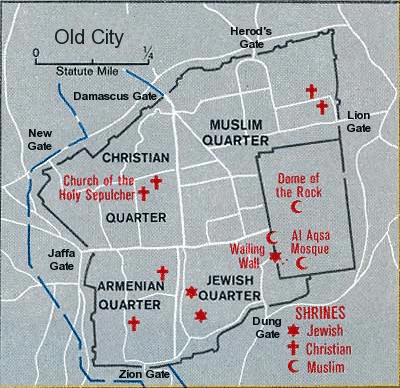
Jerusalem’s old city is divided into four quarters: The Christian Quarter, The Armenian Quarter, The Muslim Quarter, and the Jewish Quarter. Despite this clear division that involves little interaction or dialogue, there is something significant that brings each culture and subculture to the “center of the earth.” Here lies some of the holiest pilgrimage sites for each faith, some of these sites even act as pilgrimage sites for multiple religions.
Jerusalem has witnessed major civilization clashes which have lasted the test of time. The Jewish kingdom, under King David, established Jerusalem as their capital in about 1,000 BCE, where the first holy Temple was built. From then the Babylonian, Persian and Greek empires each conquered and occupied the city. The Romans took their turn and conquered this land from the Greeks, changing its name from “Judea” to “Palestine” and destroying the Second Temple. As history progressed, Roman control transitioned to Byzantine control, only for the city to be later conquered by early Islamic caliphates, then by European Crusaders and eventually the Mamluk Sultanate. The Ottoman Empire had a quick spirt of control until World War I, when the British had a turn of possession. It was not until 1948 when the modern state of Israel was established.
The story of conflict is not over. Israel gained control of the western portion of Jerusalem, but Jordan occupied the eastern areas, which included the Old City and the Jewish holy sites. Israel defeated the Jordanian army and captured the eastern part of the city in 1967 during the Six-Day War. It was not until this time that the city’s holy sites were opened to members of all faiths.
With such a recent history of conflict and conquest it is not surprising that much of it still exists today. It is clear that there is a lingering intolerance that surrounds the city. Each religion remains largely homogeneous. It is easily recognizable which quarter of the Old City you are in without glancing at a map. It is true that in Jerusalem is where I feel such conflict the most, but in a completely ironic sense, never have I seen a land with such great religious diversity be so unified. What I see is a respect for the holiness of this land, and an agreement that each religion has their own space and their pilgrimage sites.
Following the Via Dolorosa
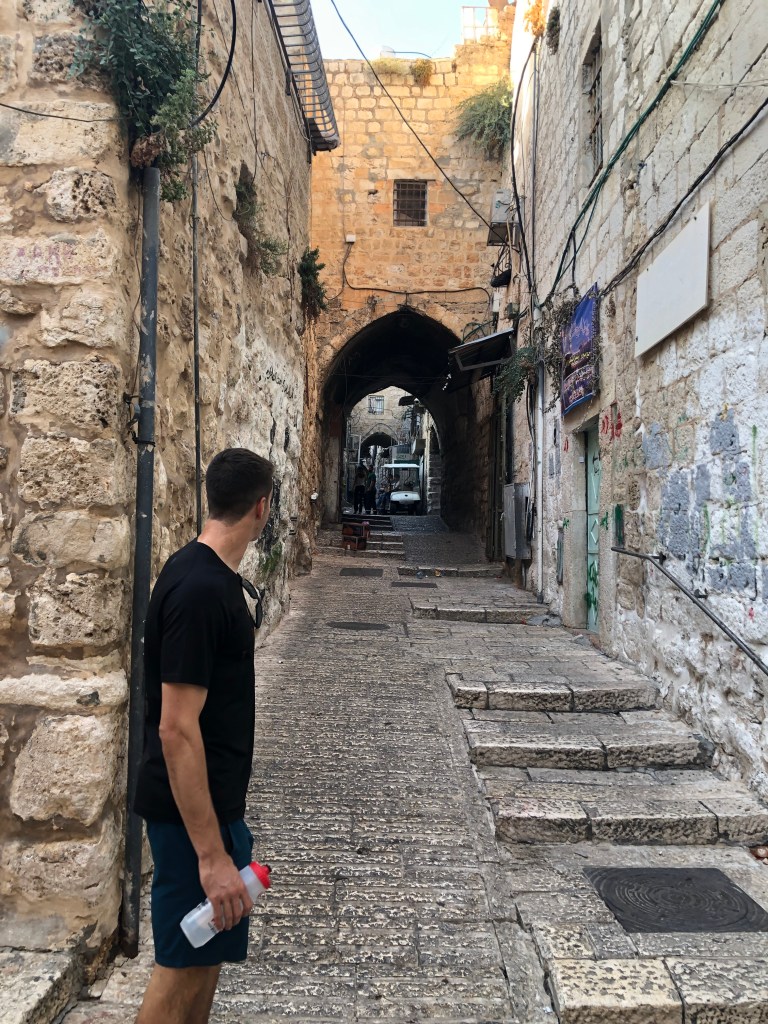
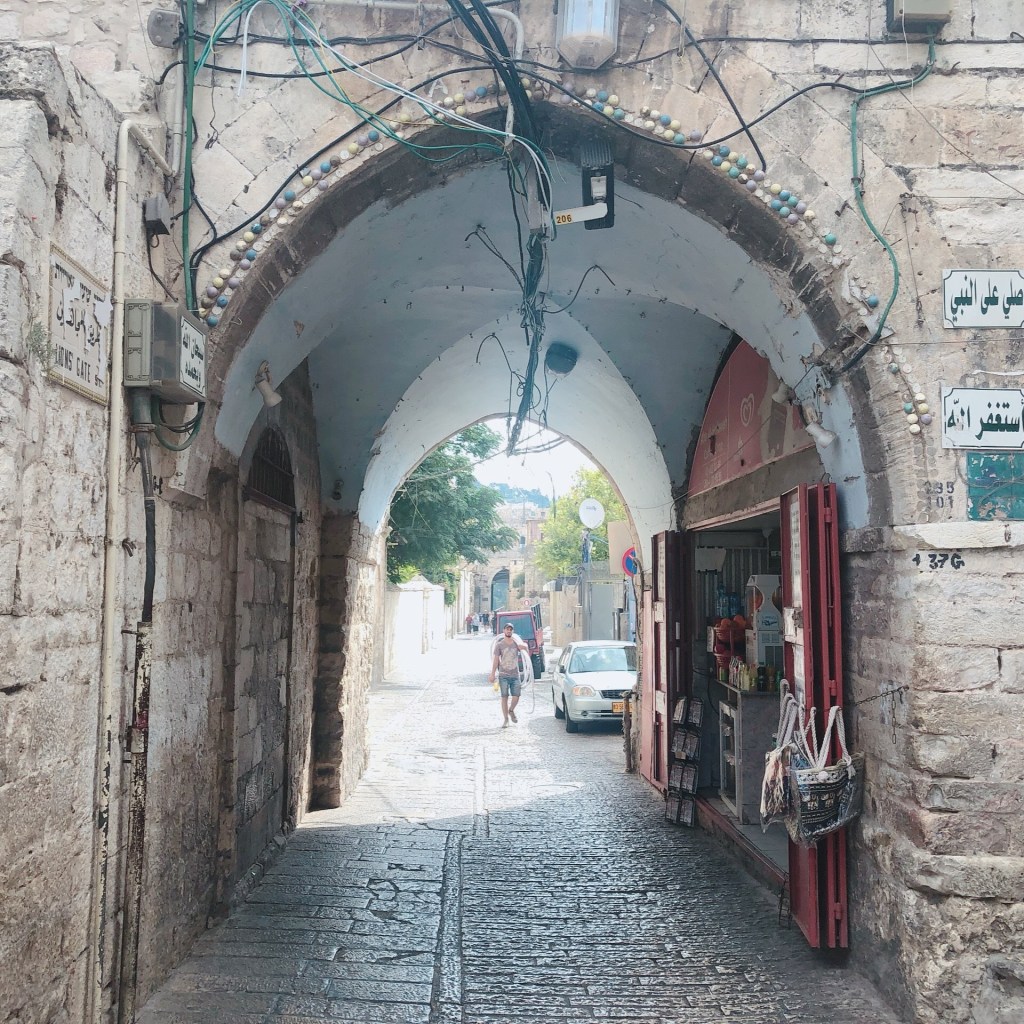
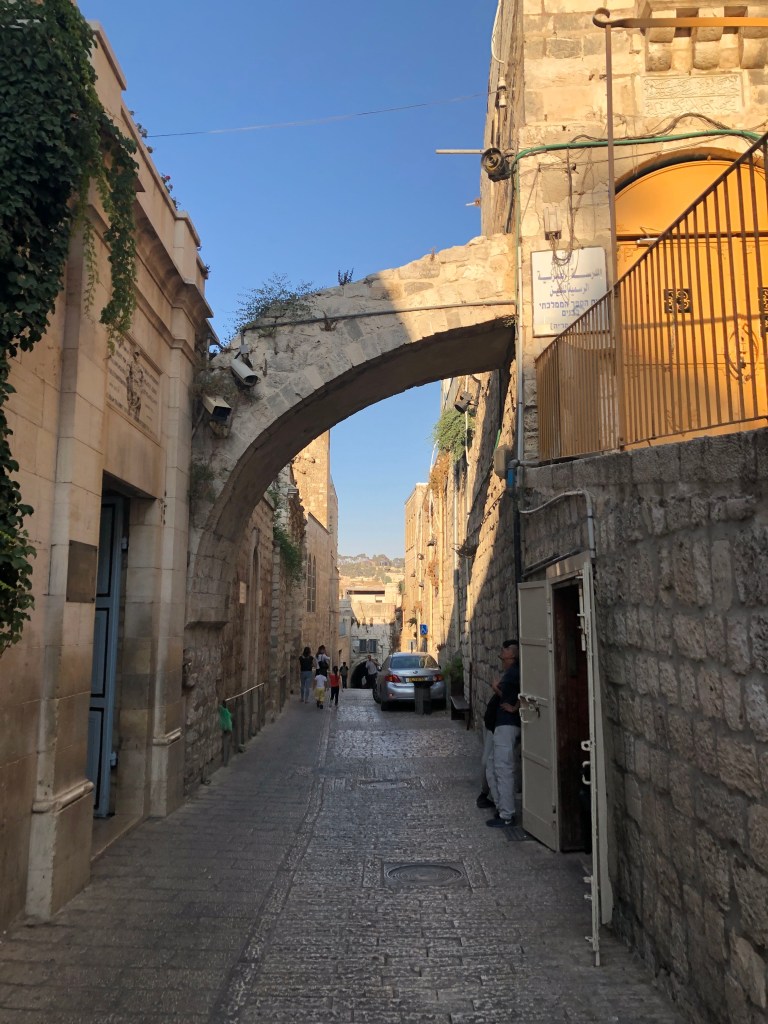
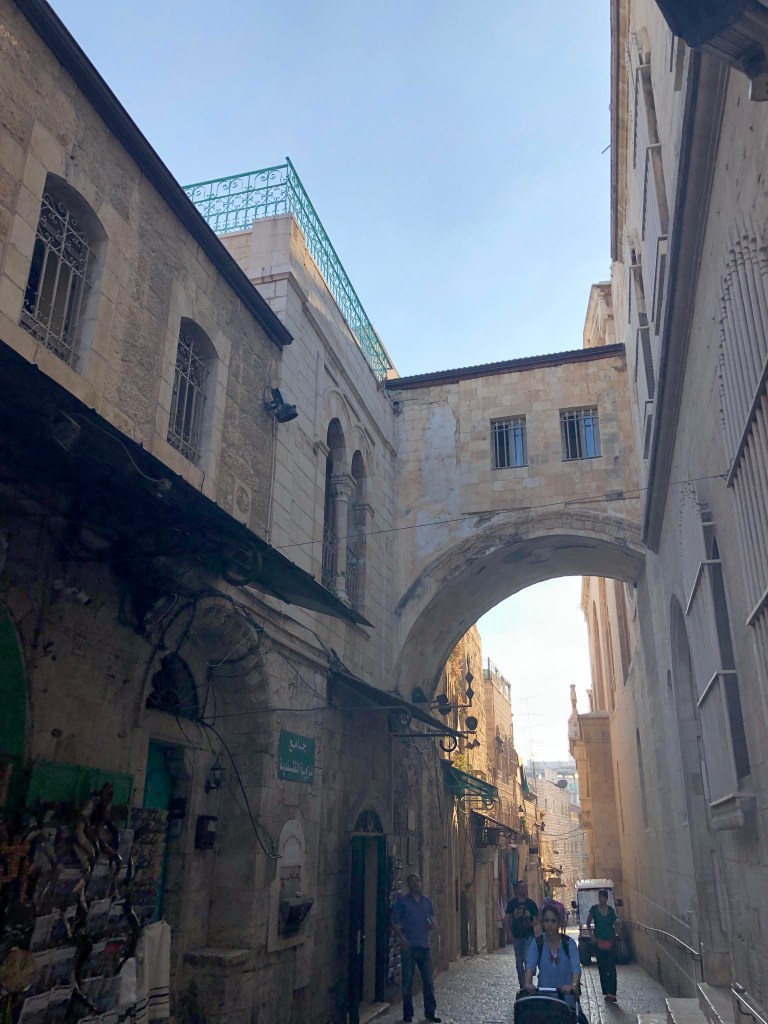
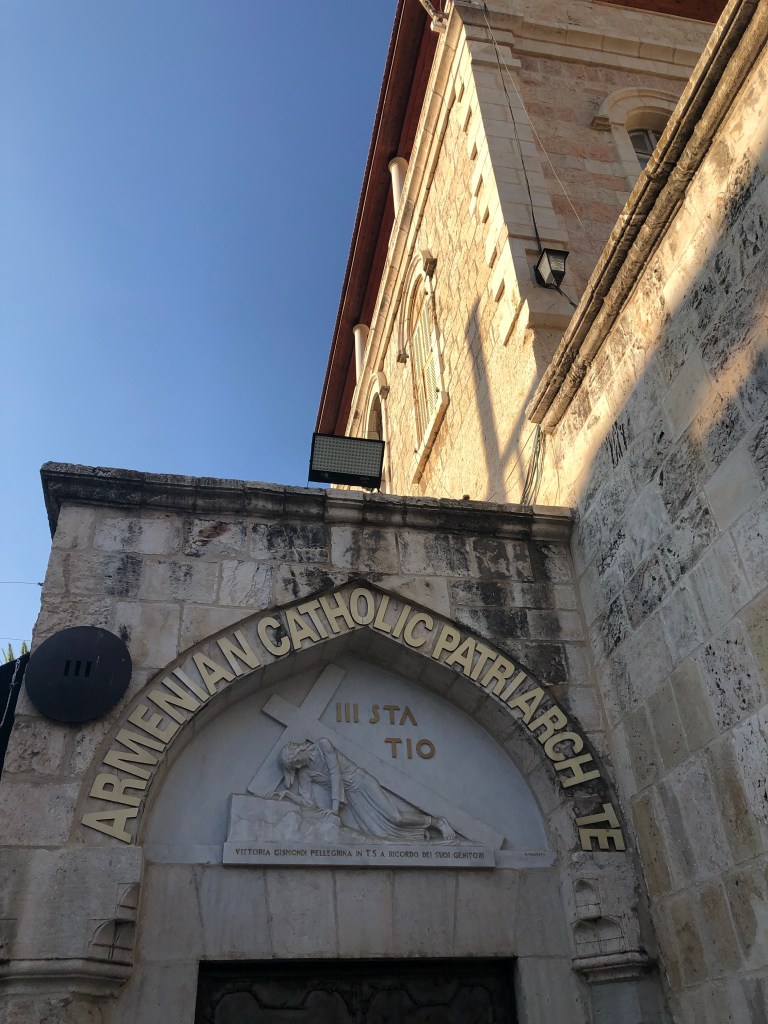
Starting at the Lions Gate, this cobblestone road winds through the old city of Jerusalem. Via Dolorosa translates to the ‘Way of Sorrow’, and was given this name because it was the path Jesus took, carrying the cross, to his crucifixion. Along this path lay critical points on Jesus’s procession, known as stations of the cross, ending at the famous Church of the Holy Sepulchre, where Jesus is believed to have been crucified and resurrected. Today, this road winds through the small busy alleyways of the Muslim sooq’s and even is home to one of my favorite hummus shops, Abu Shakker’s.
St. Annes Church
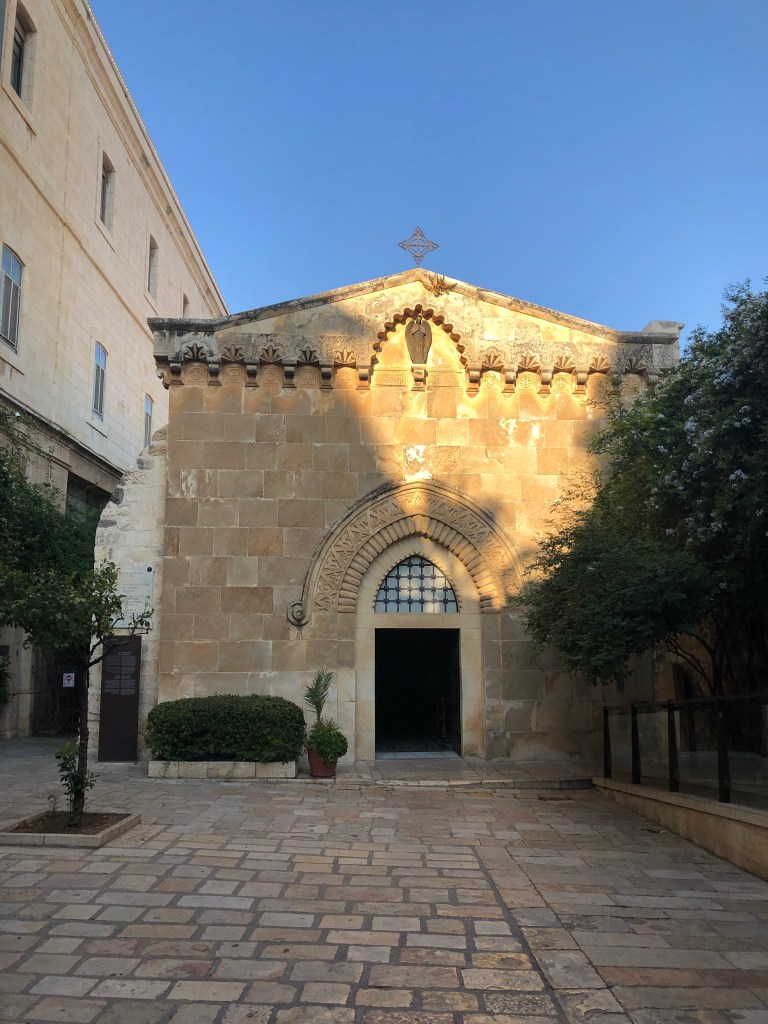
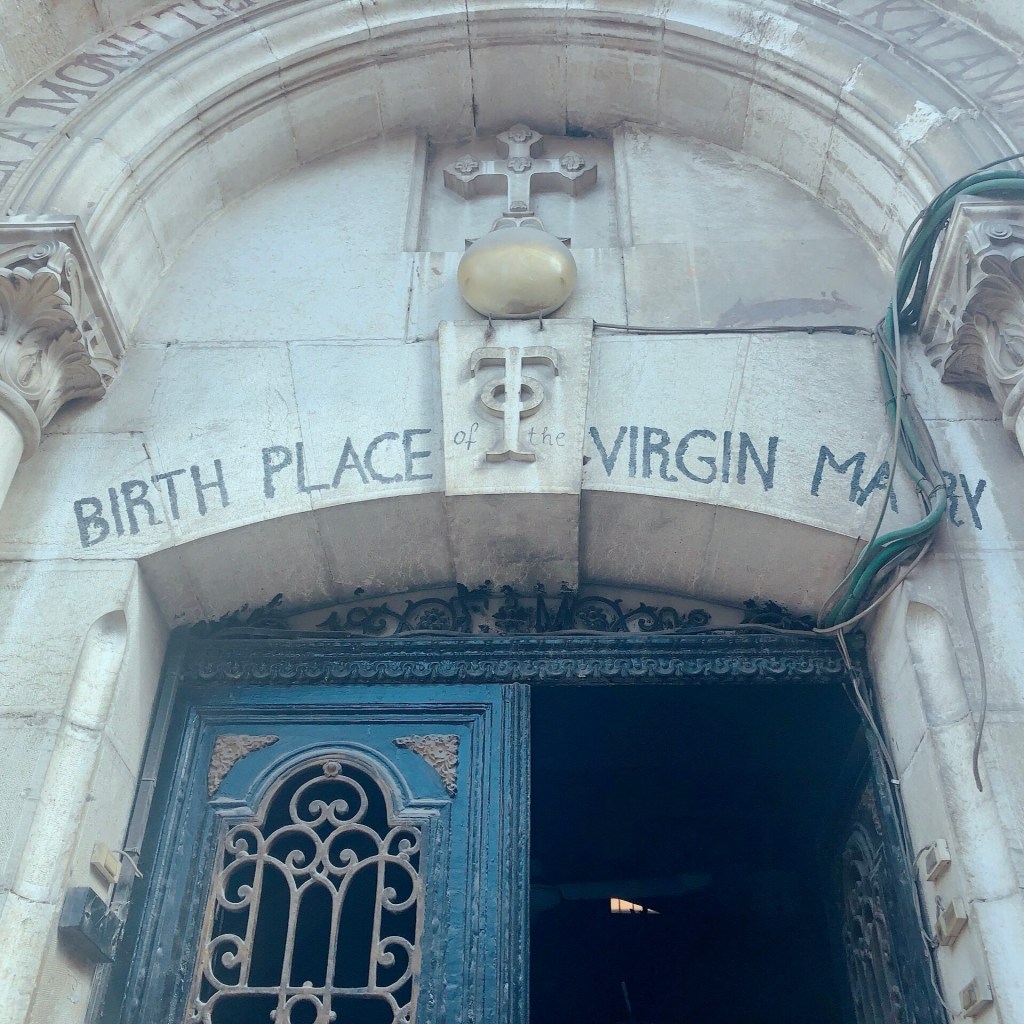
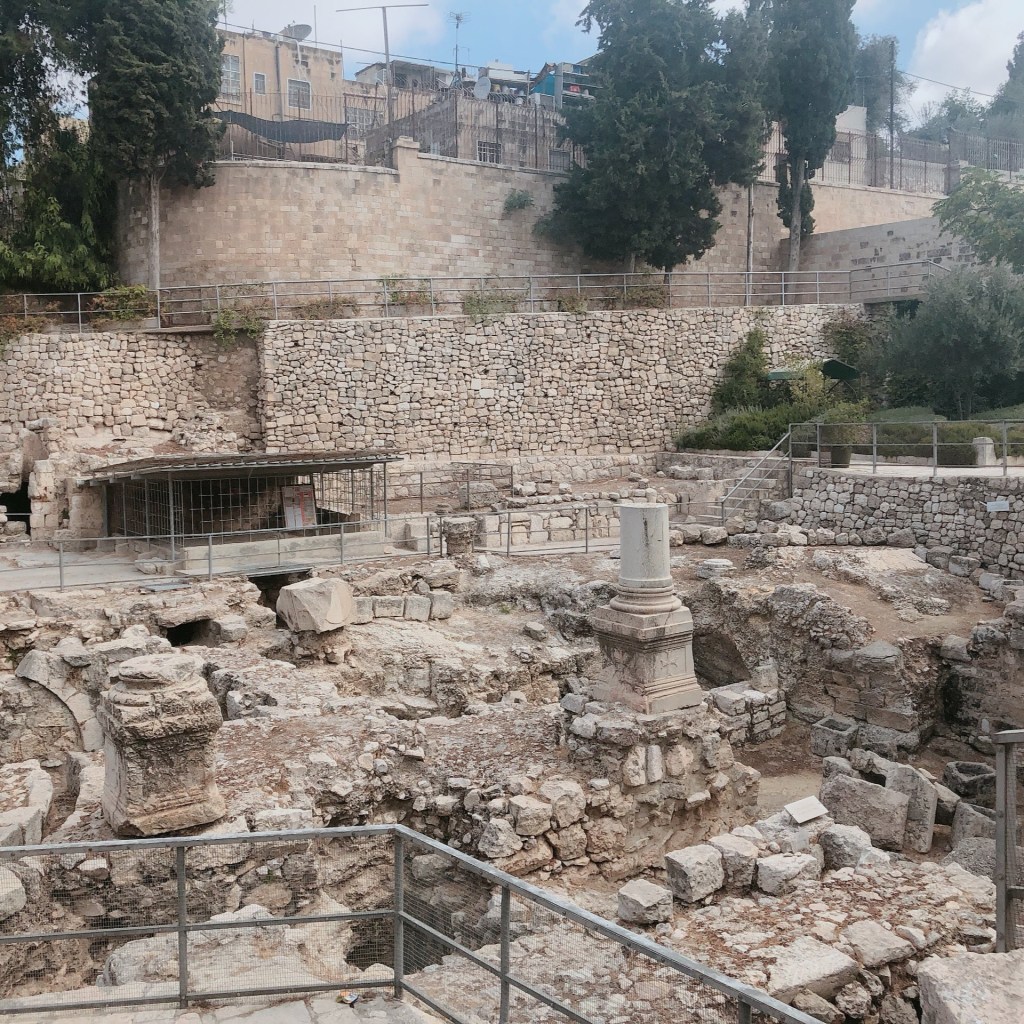
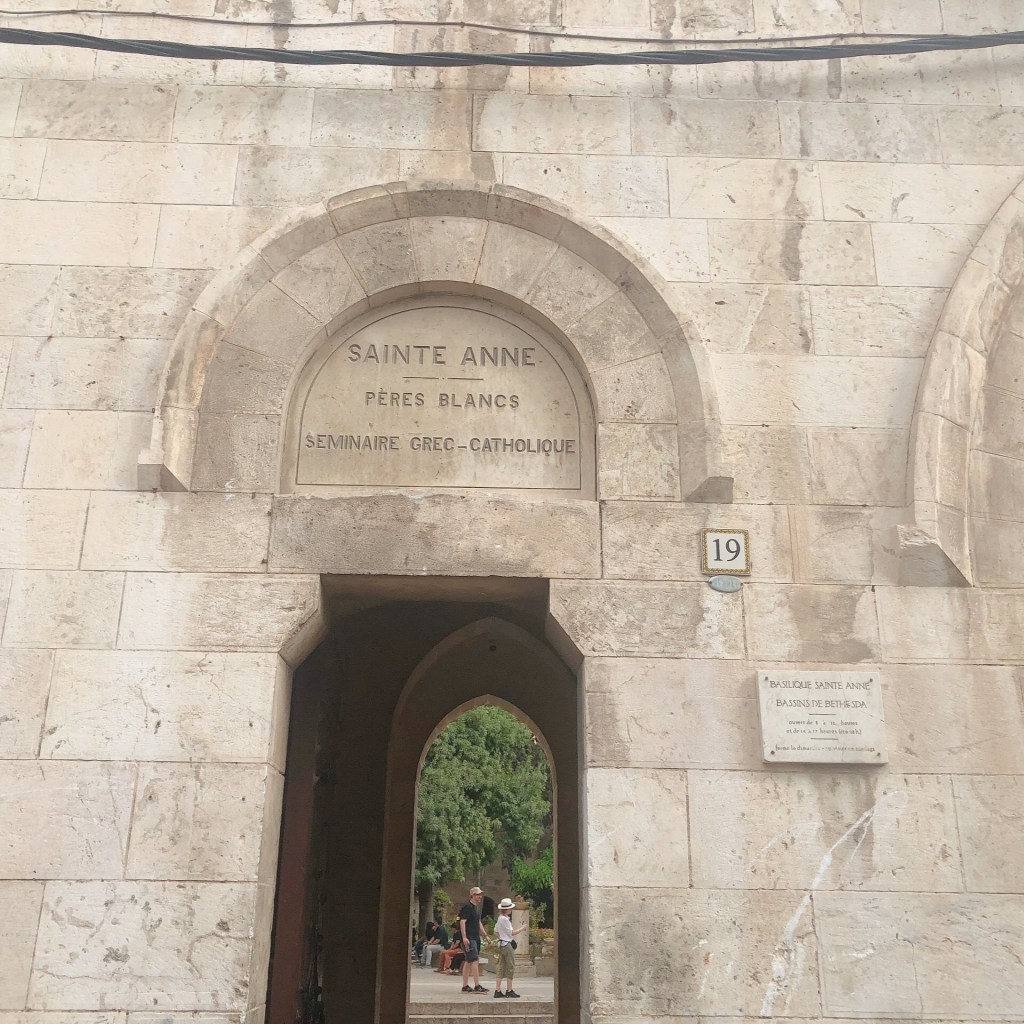
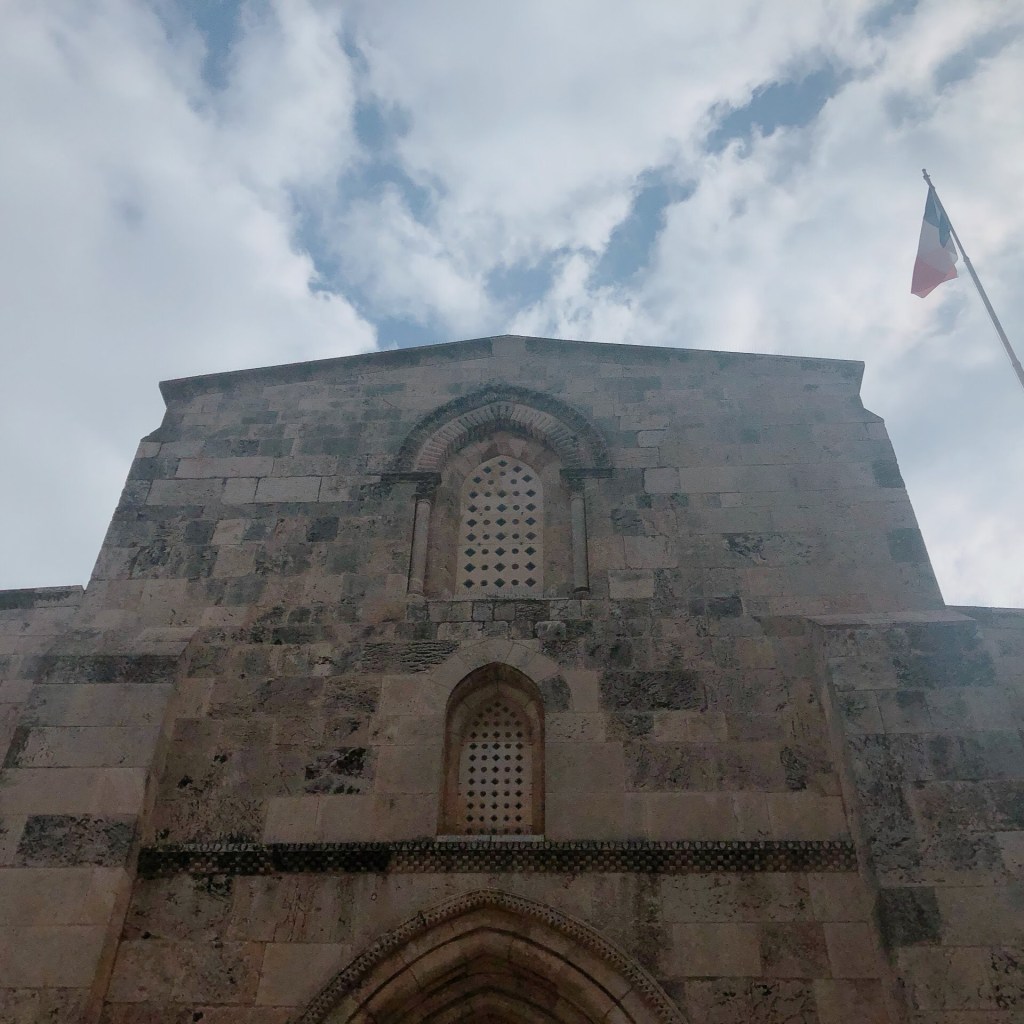
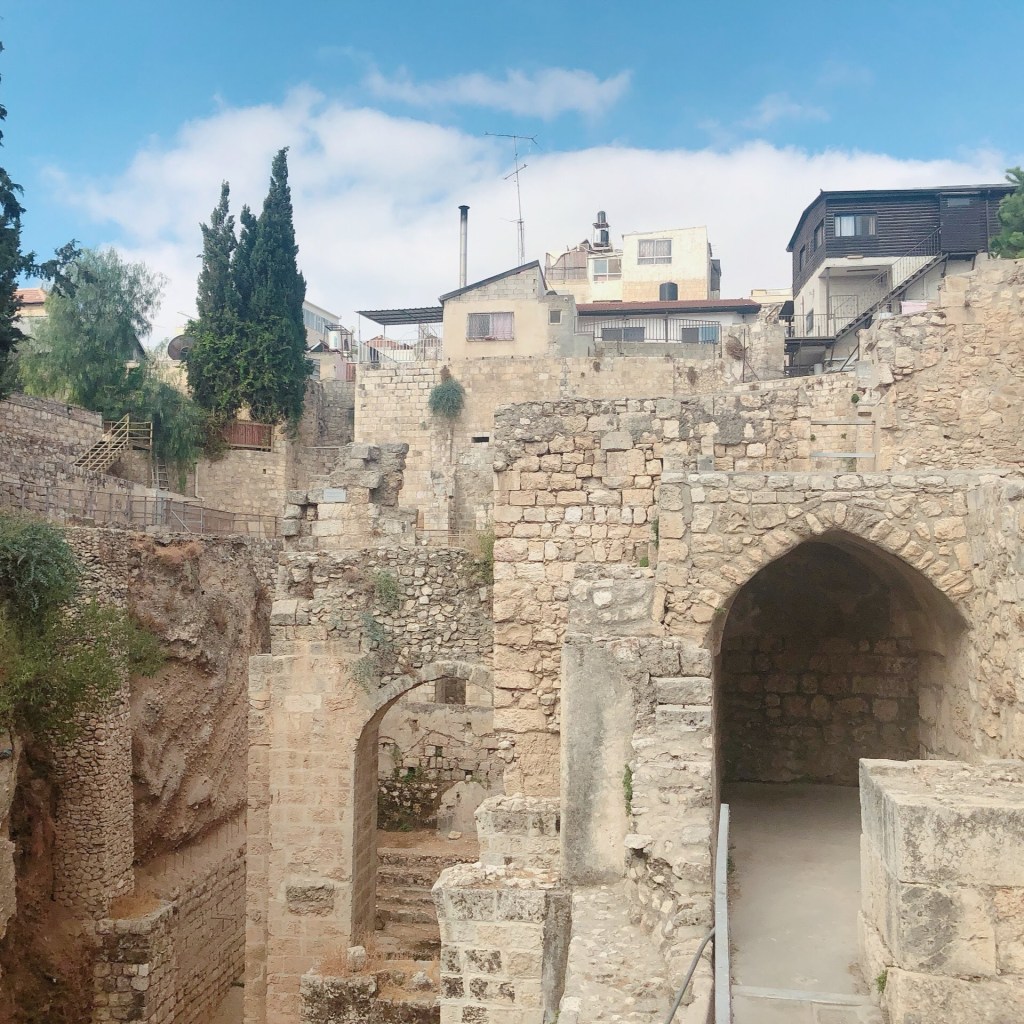
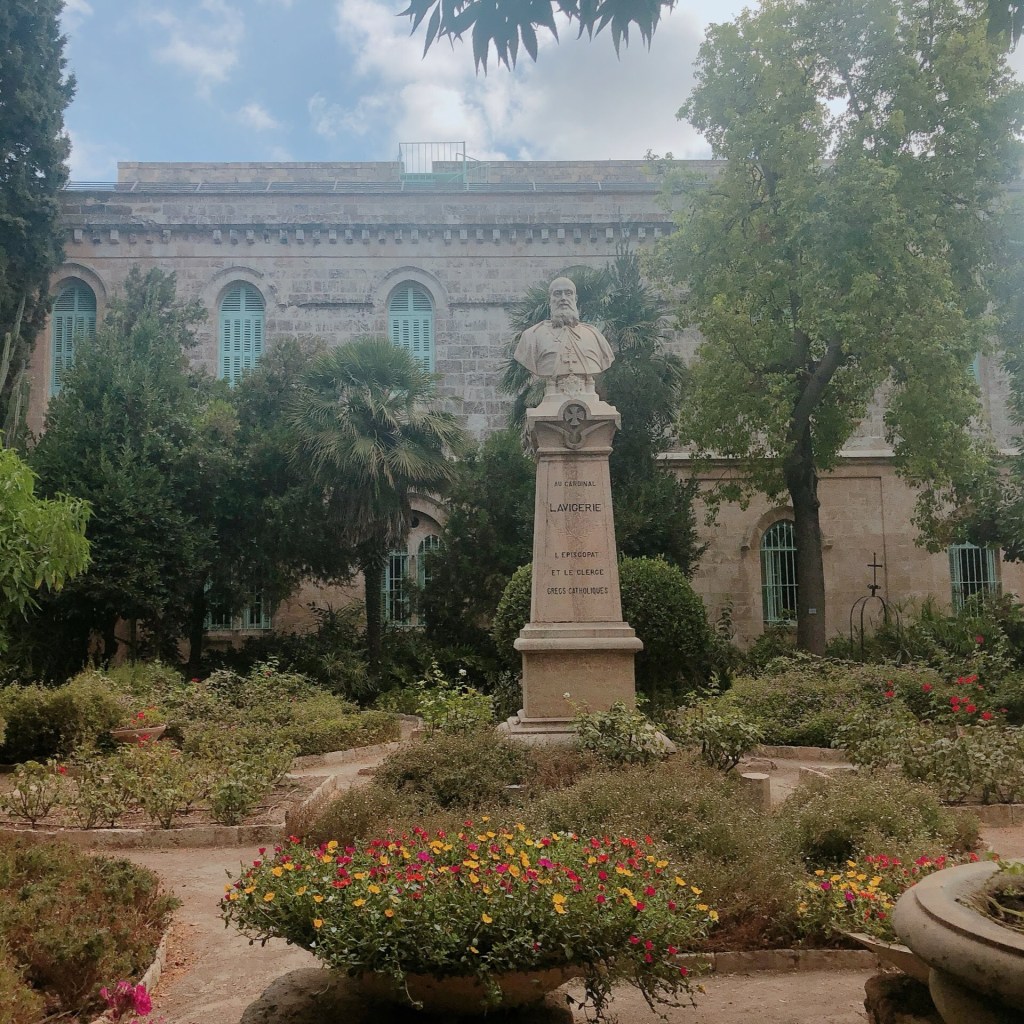
St Anne’s church is a fine example of Crusader architecture completed in 1138. It was built on a site thought to have been the home of Joachim and Anne, parents of the Virgin Mary. On this site you can witness the ruins of the ancient church and climb down dark stairwells into spooky crypts and baths. One of the sunken pools is thought to be the biblical Pool of Bethesda where Jesus is said to have healed a sick man.
Church of the Holy Sepulchre
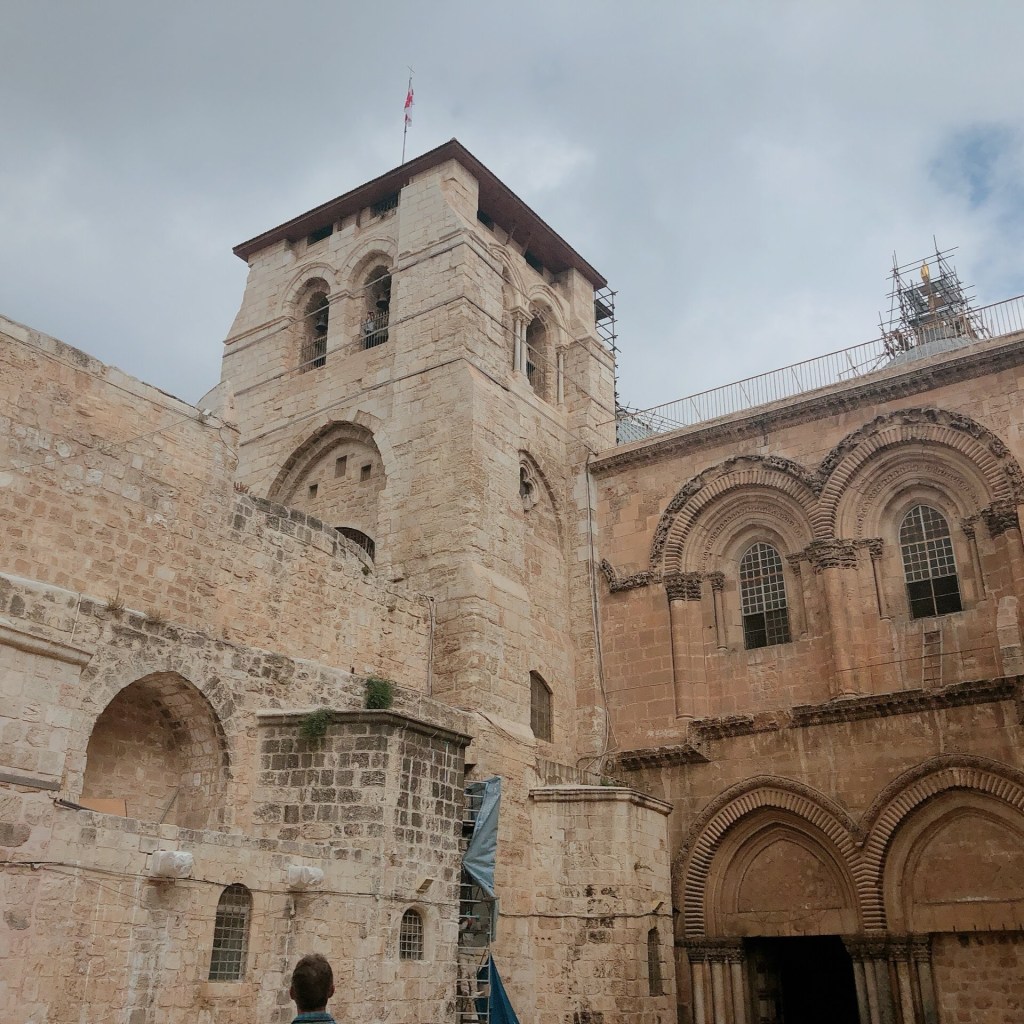
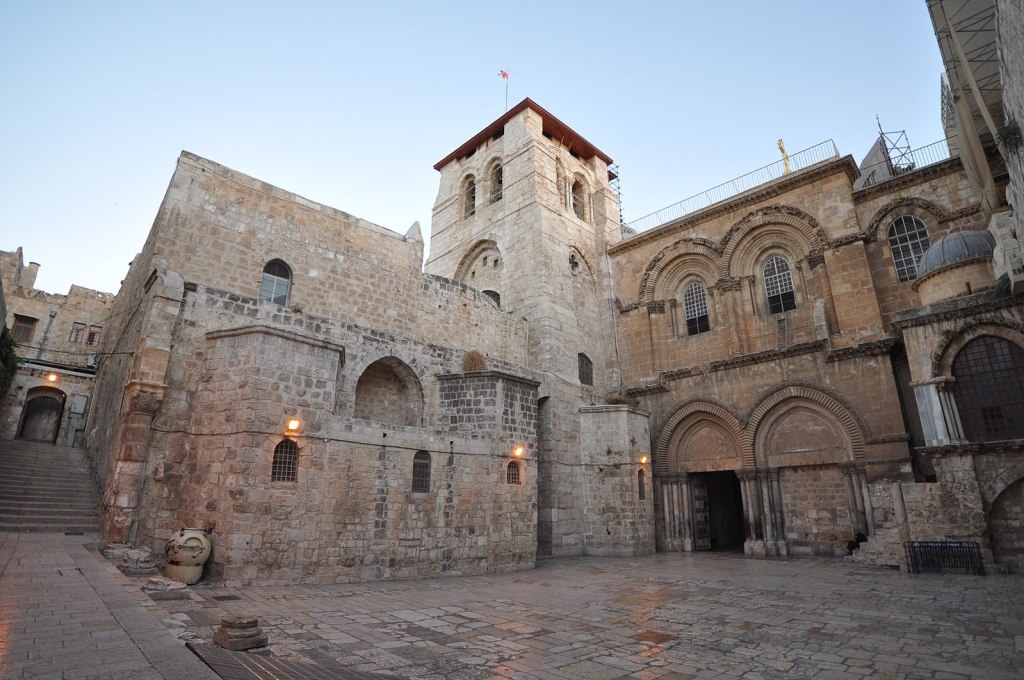
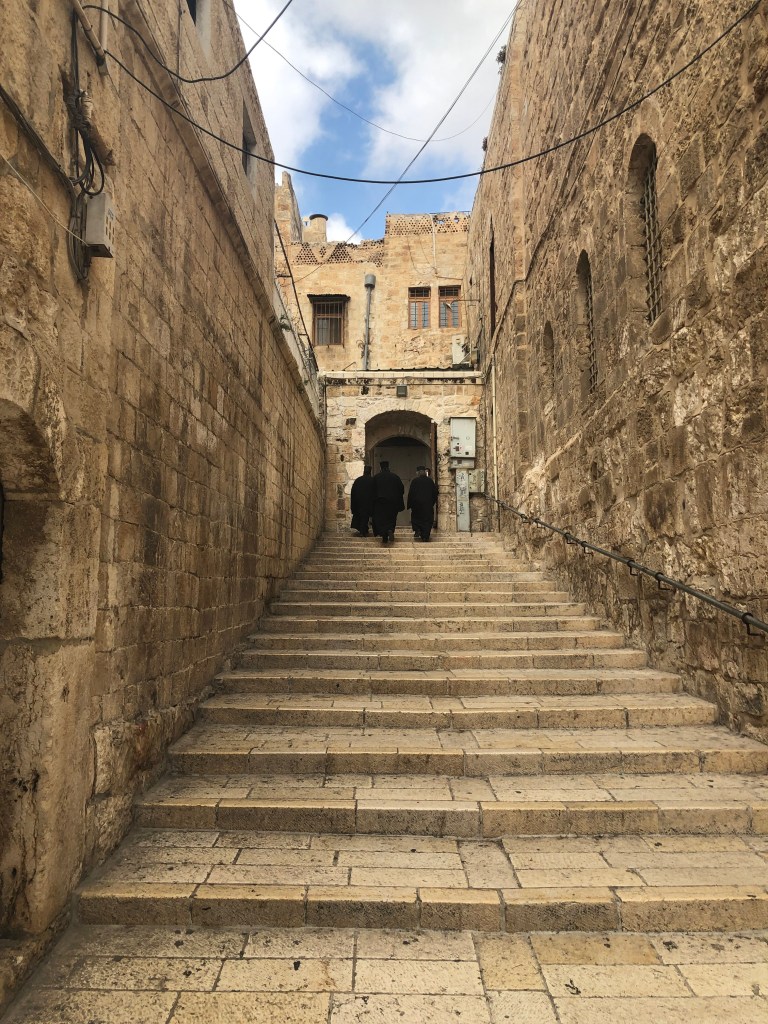
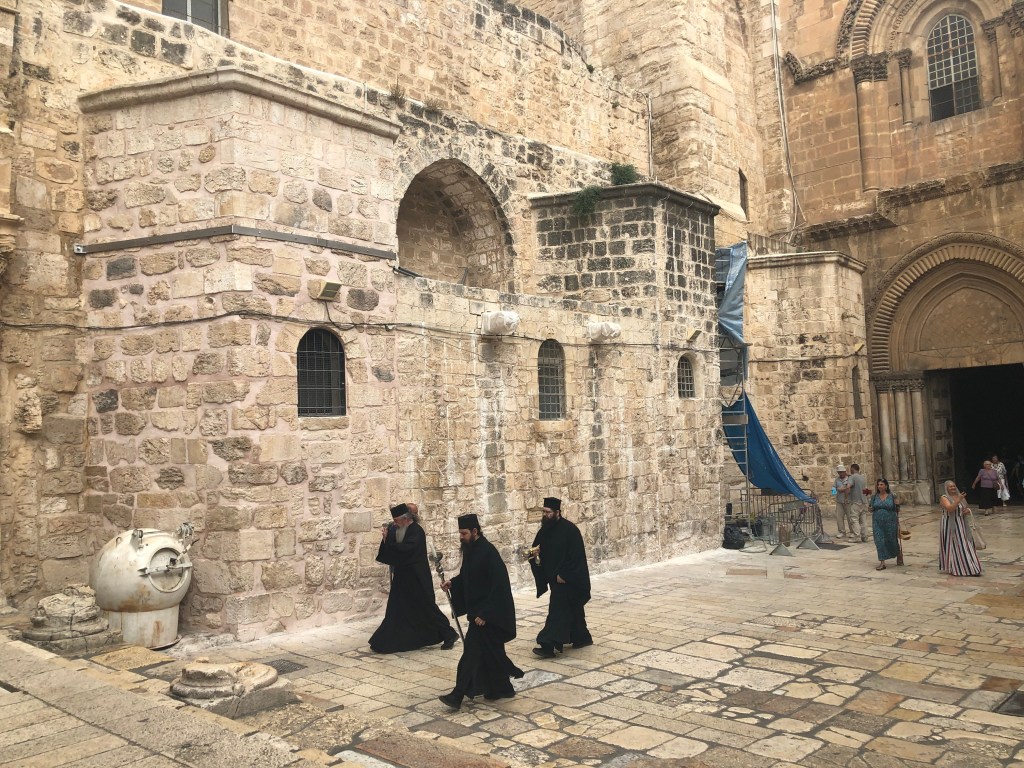
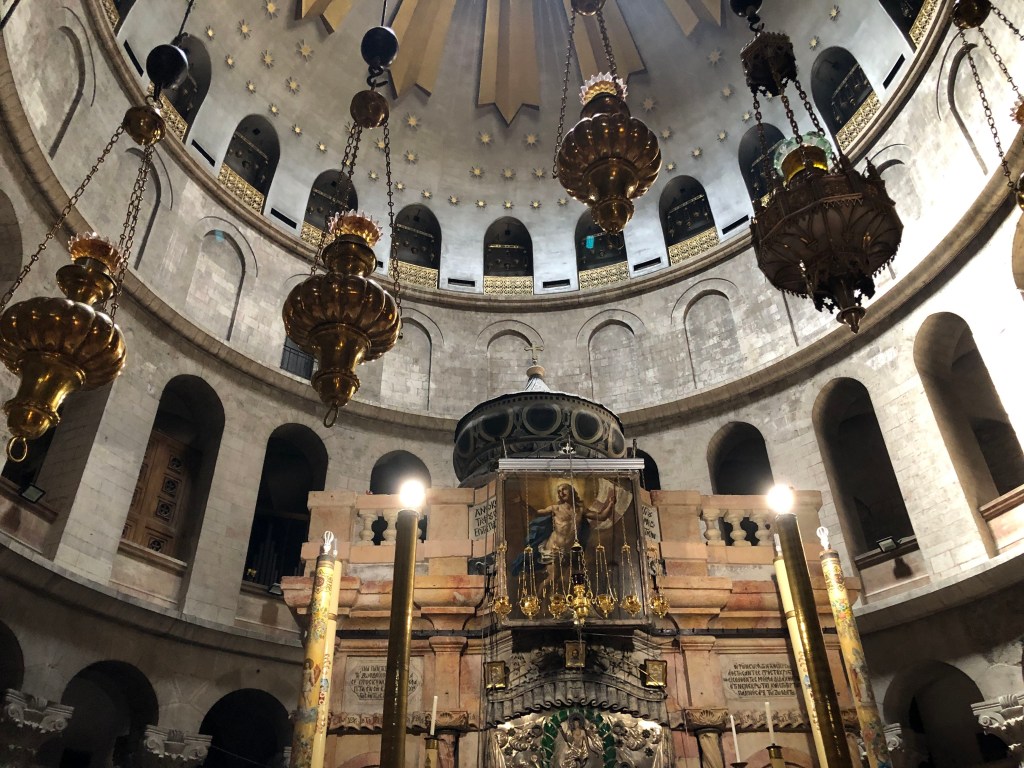
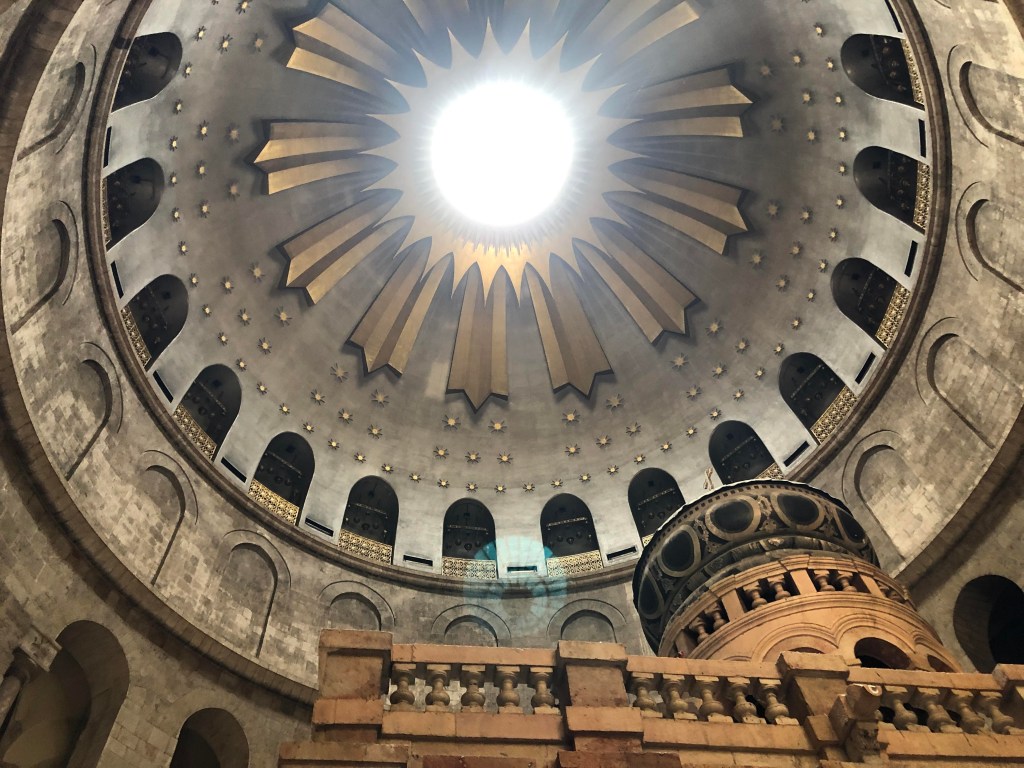
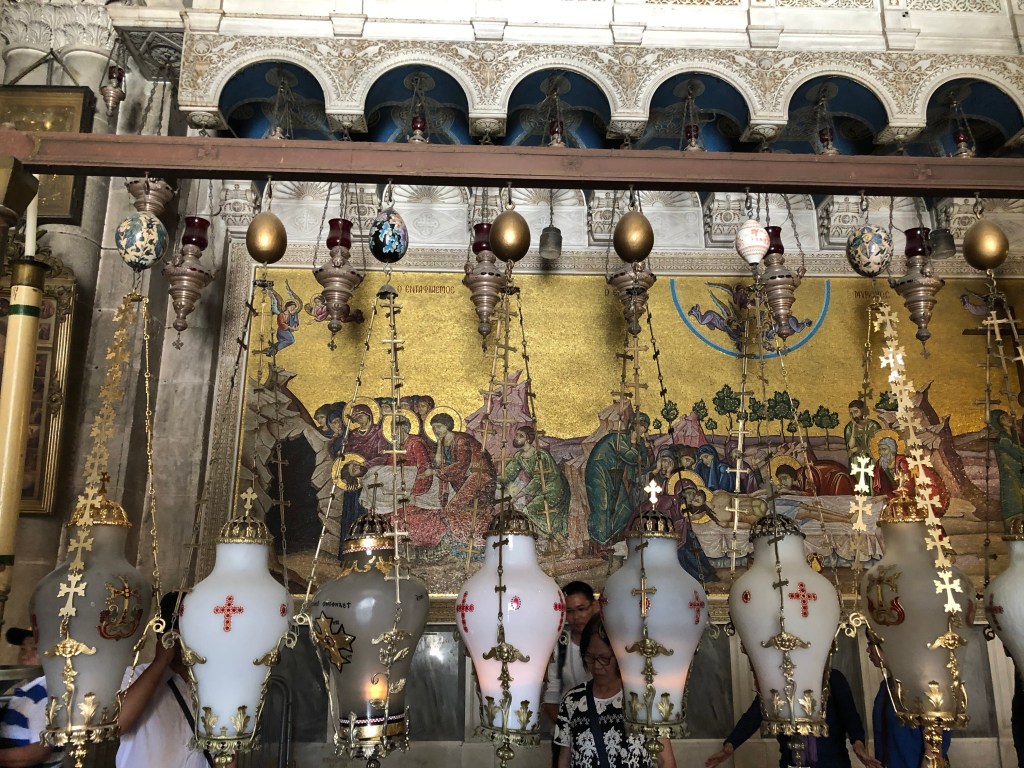
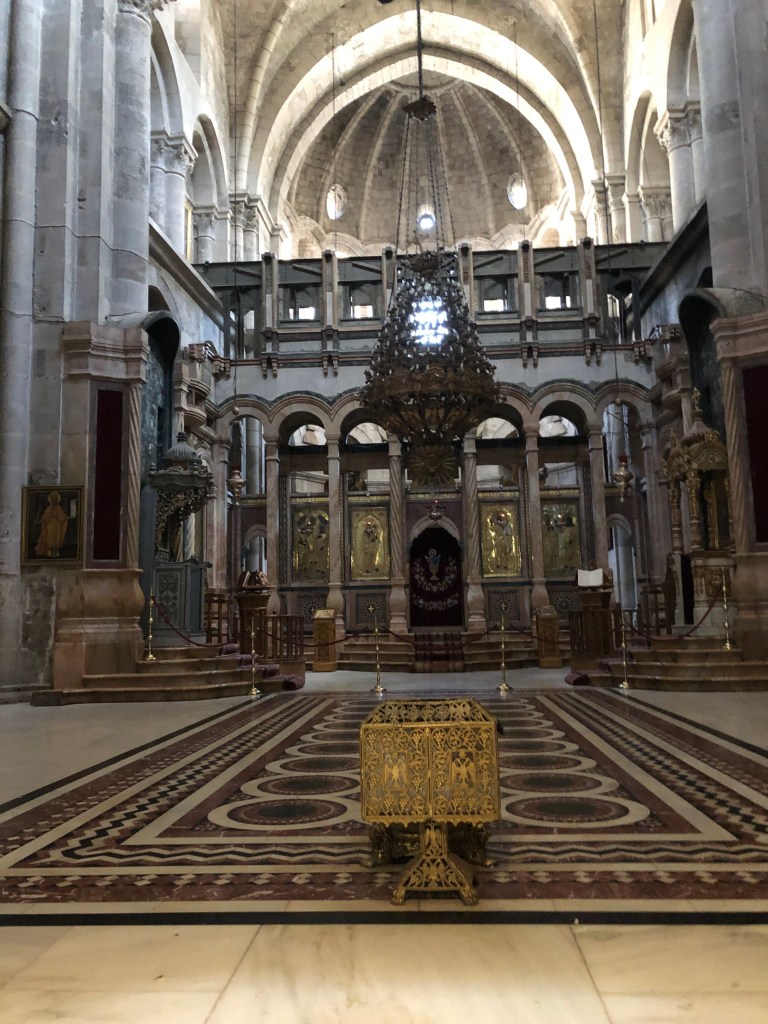
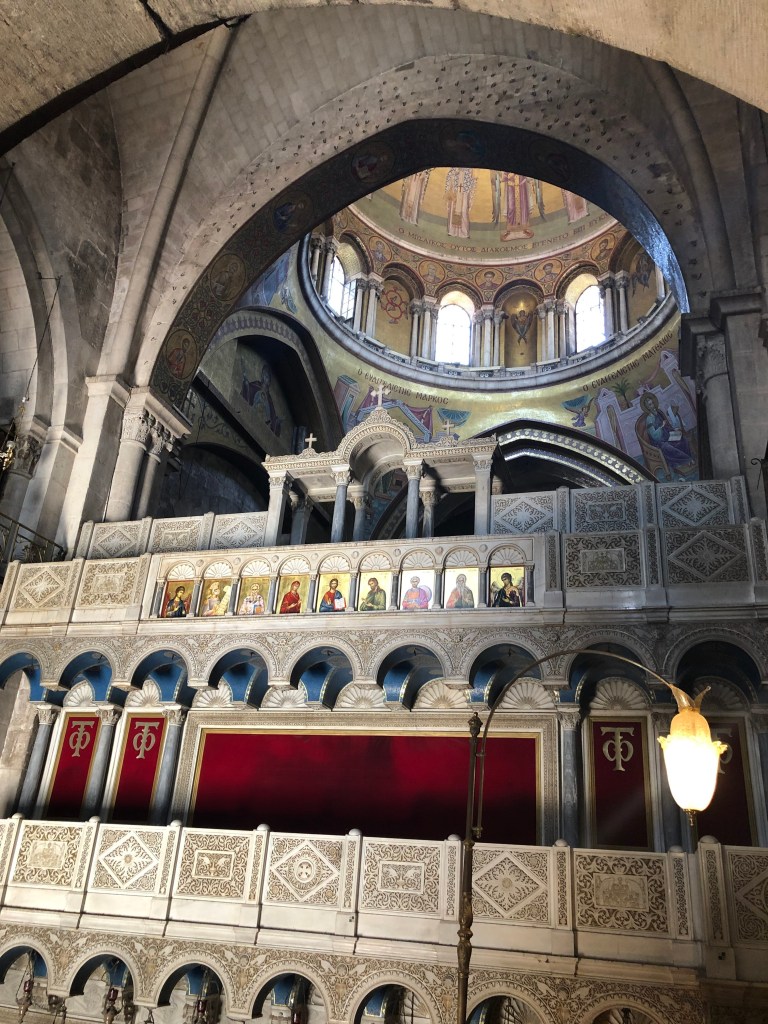
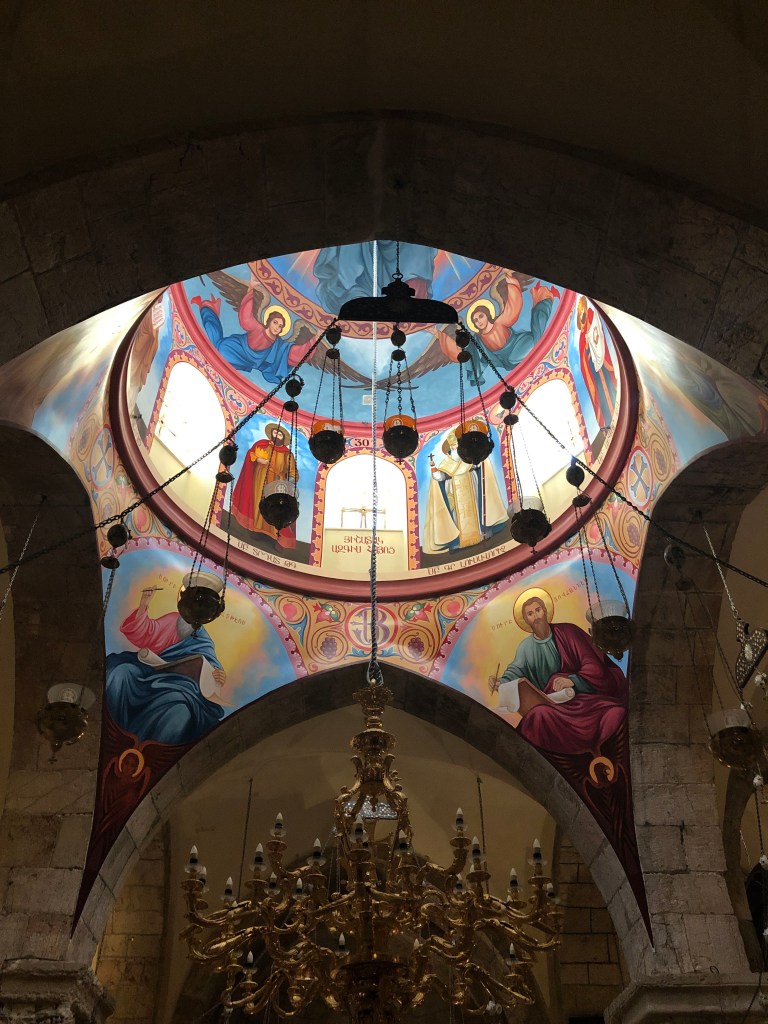
Upon arriving at the the Church of the Holy Sepulchre, which from the outside looks a lot like other Christian churches in the city, I was completely unaware of its holiness. It was not until I stepped foot inside that I immediately realized I somewhere very special. After a quick glance at the tourist guidebook, I learned that this is the site of Jesus’s crucifixion and burial, the holiest site in Christianity. The church has incredible decorations, from the numerous chandeliers, to the mosaic work on the walls, and the incredible paintings that line the ceilings.
As soon as you enter the church you are greeted by the Stone of Unction, which commemorates the preparation of Jesus’ body for burial. A quick turn and you are in front of the Tomb of Christ. You certainly don’t have to be religious to feel the spirit and energy standing in front of this.
The Church of the Holy Sepulchre is divided between Christian denominations. The Greek Orthodox, Armenian Orthodox, and Roman Catholic denominations each guard their portions, which of course has led to some passionate disagreements. It was a bit amusing to learn that a Muslim family has control of the keys to the church to prevent these disputes. Thank goodness for my handy dandy Lonely Planet book and English tour group guides I was able to overhear.
Tower of David
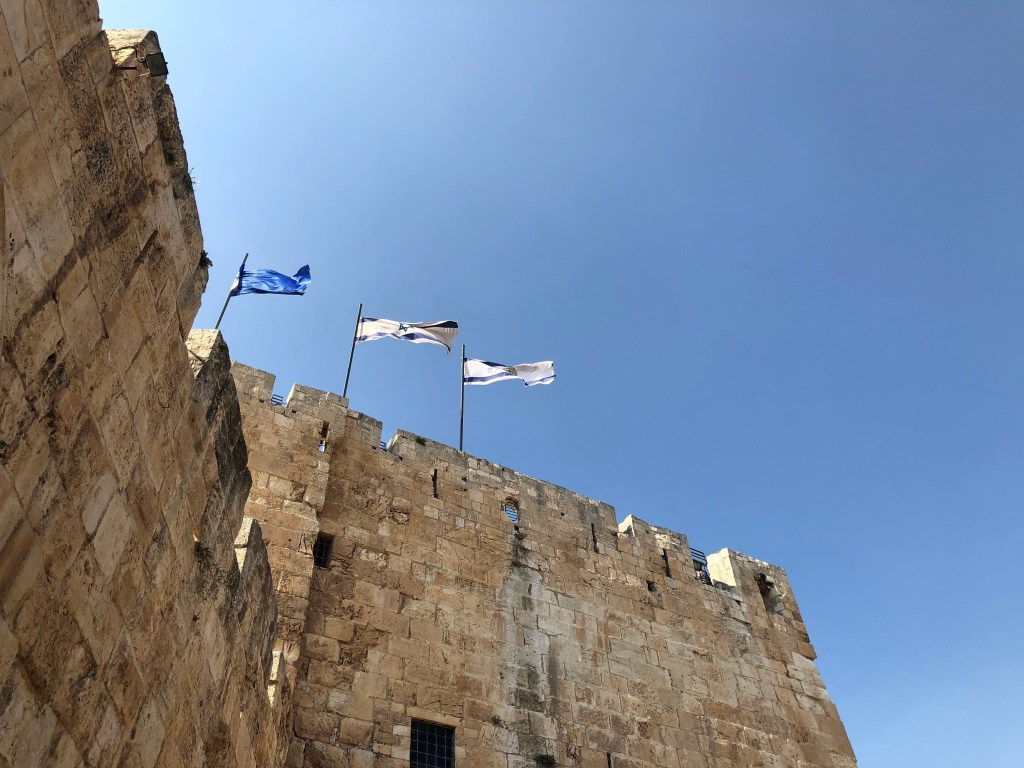
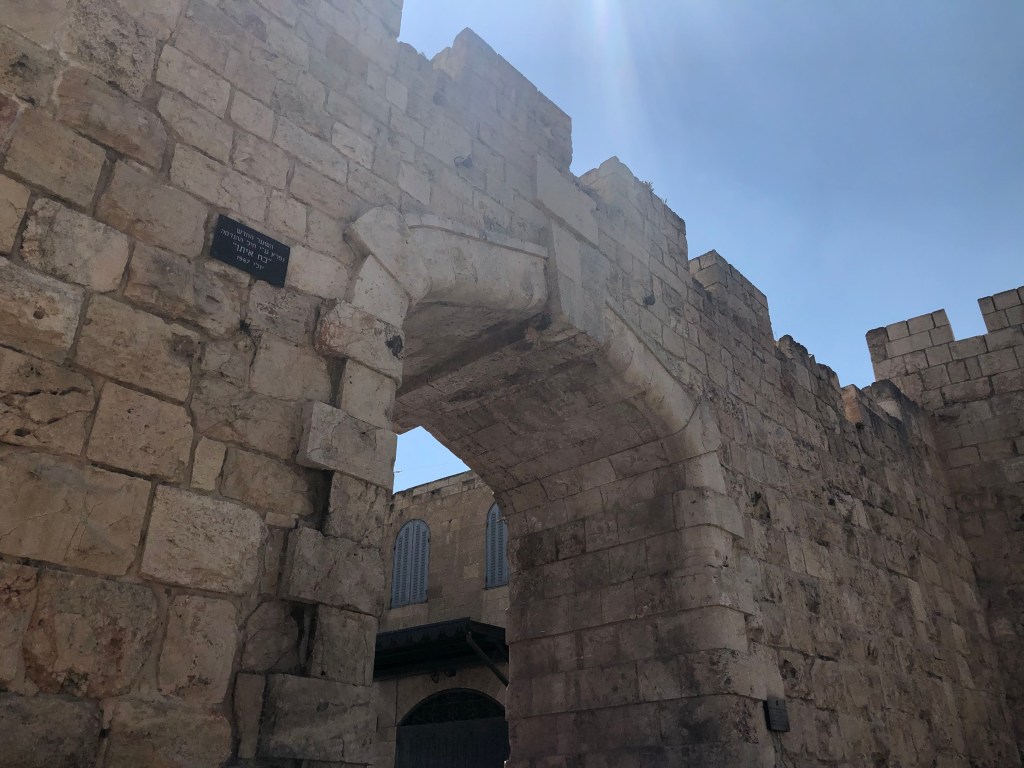
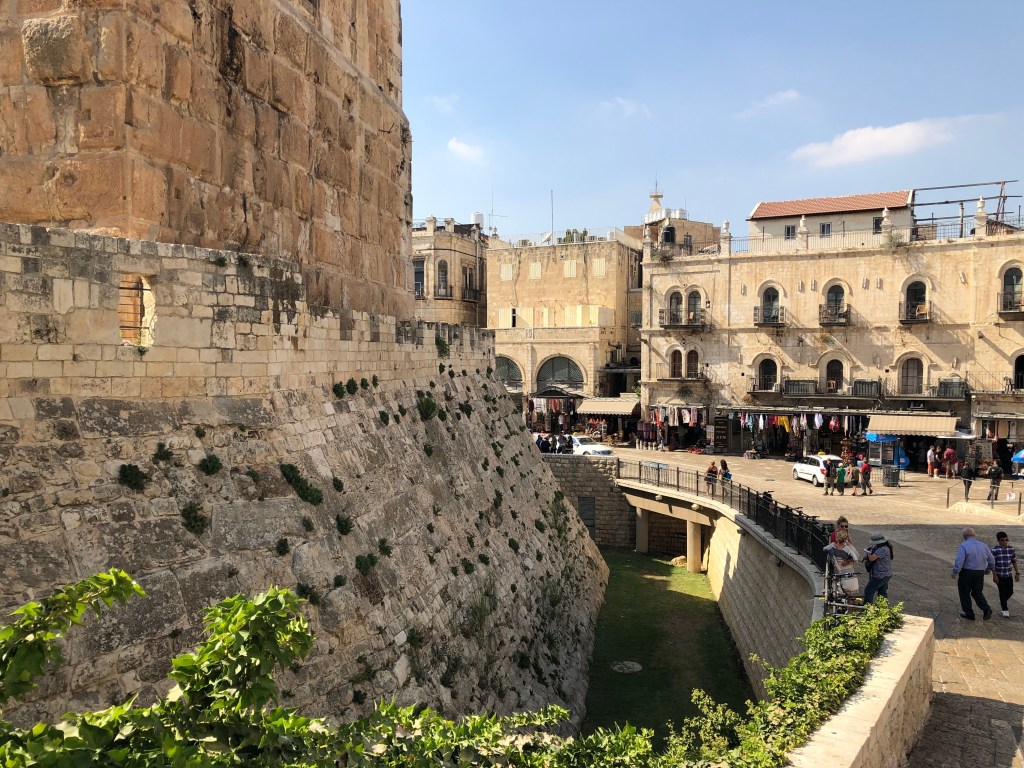
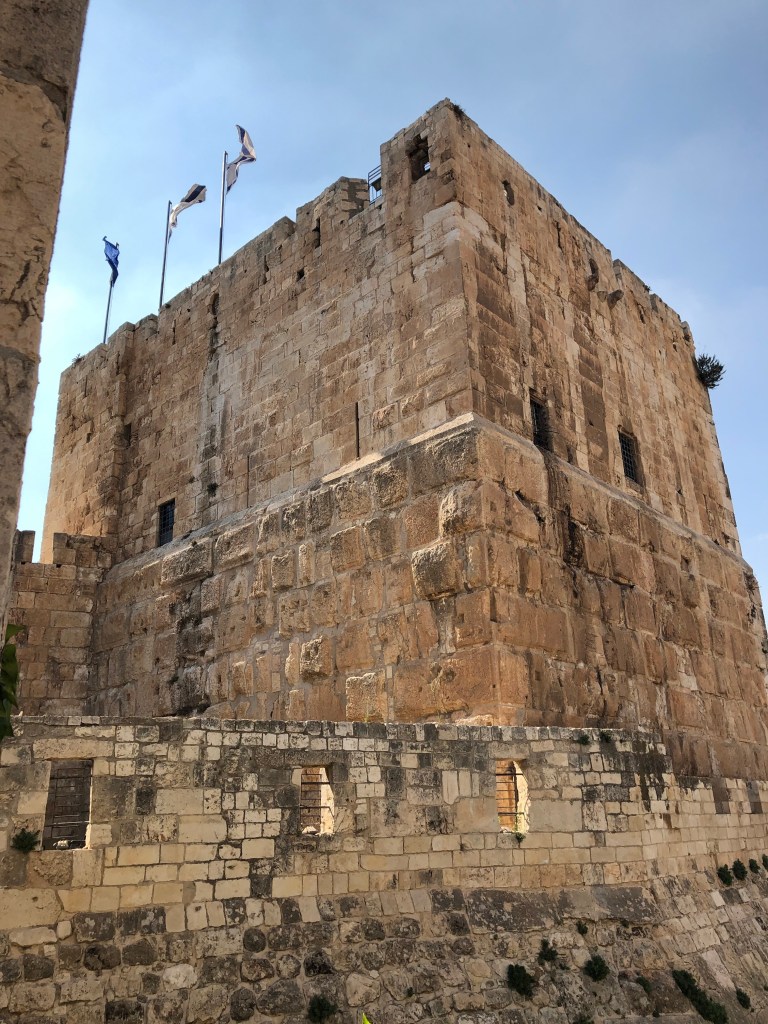
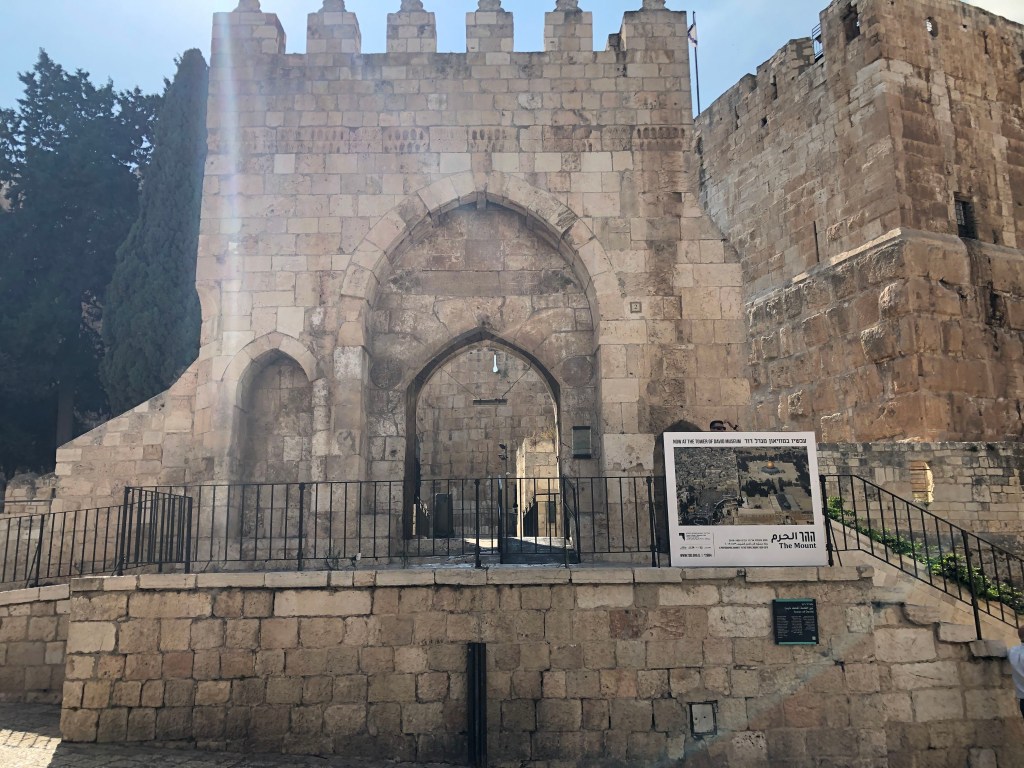
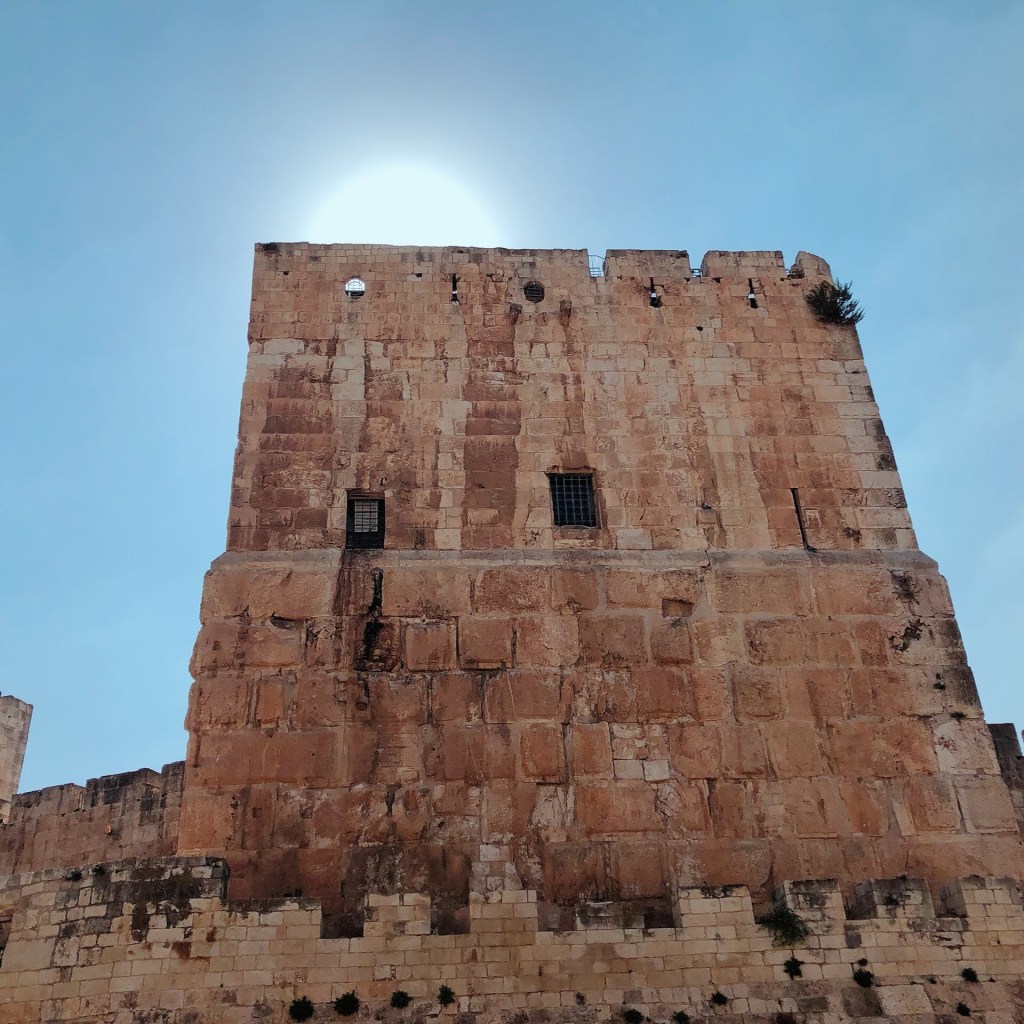
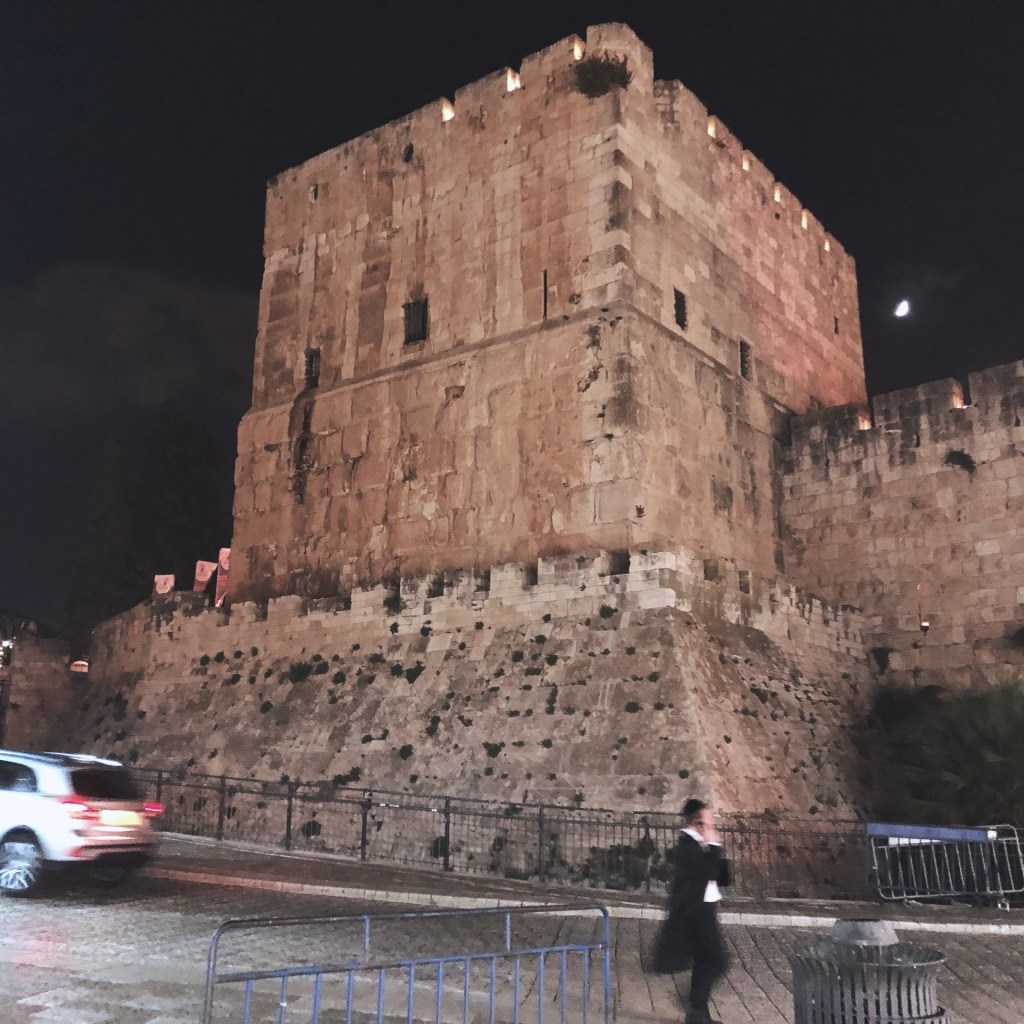
Although we were not able to visit the inside of the Citadel, the stone architecture of the Tower of David is incredible. It is crazy how something so old can still be standing so tall today. Definitely on our list of places to go inside next trip, but for now the outside did enough dazzling, and a little extra dazzling under the stars.
Mount Zion
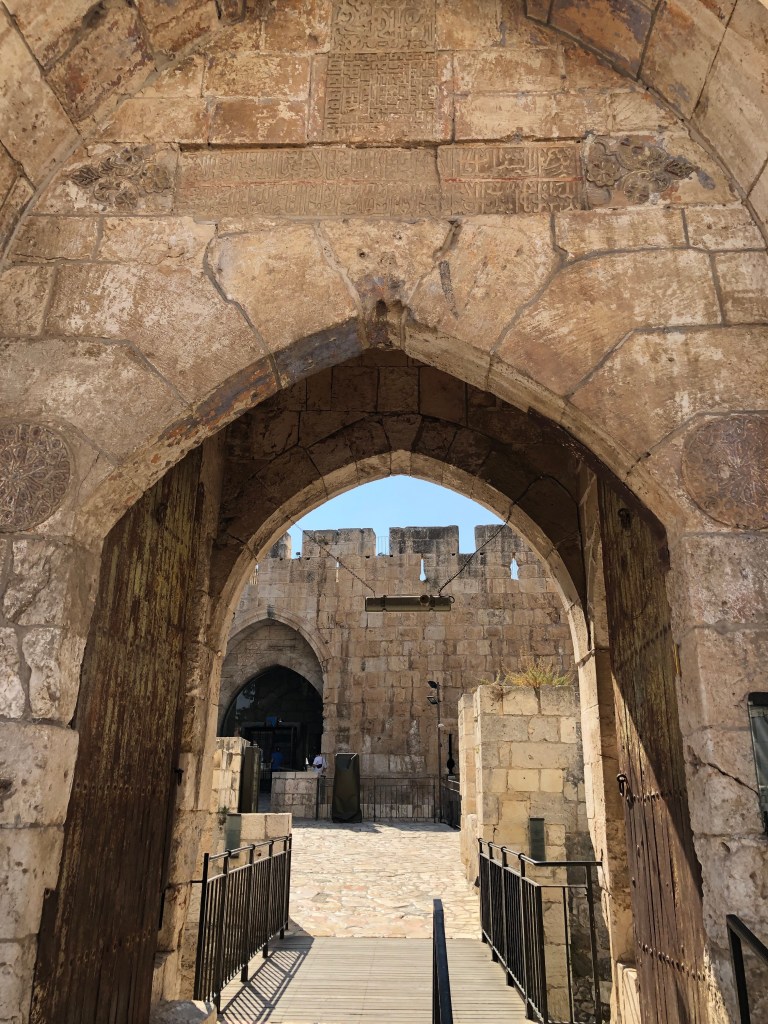
Mount Zion is located just outside the Jewish Quarter of the old city via the Zion Gate. The Tomb of King David, Dormition Abbey, and the Room of the Last Supper is located here. Just like all of the great holy sites in Jerusalem, this one is shared by religions and is a testament to the diversity of this place.
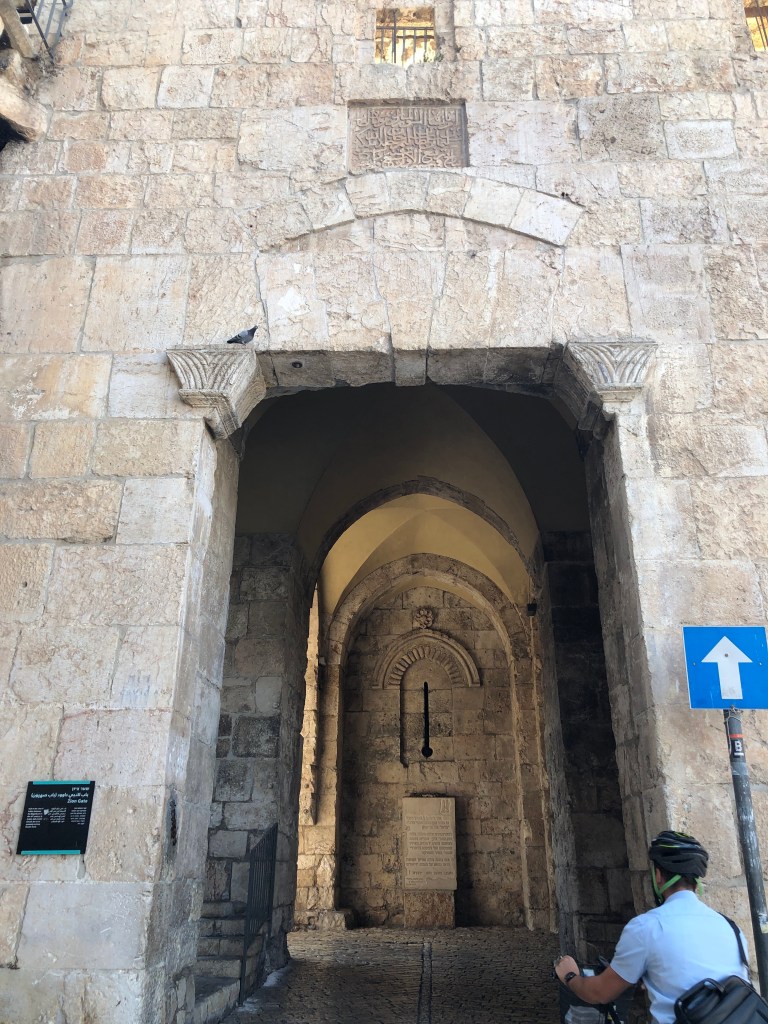
Zion Gate
King David’s Tomb
King David was an Israeli King that conquered the Land of Israel and named Jerusalem the Jewish capital. The site of his tomb is very significant for Jews because at one time in history, it was the closest Jews could get to the Old City. Today it is a pilgrimage site and a place for learning for Jews. As the sight is divided into male and female areas, Josh was able to witness the learning first hand. He was graciously taught a few Jewish prayers and given a lesson on how to wrap a Tefillin.
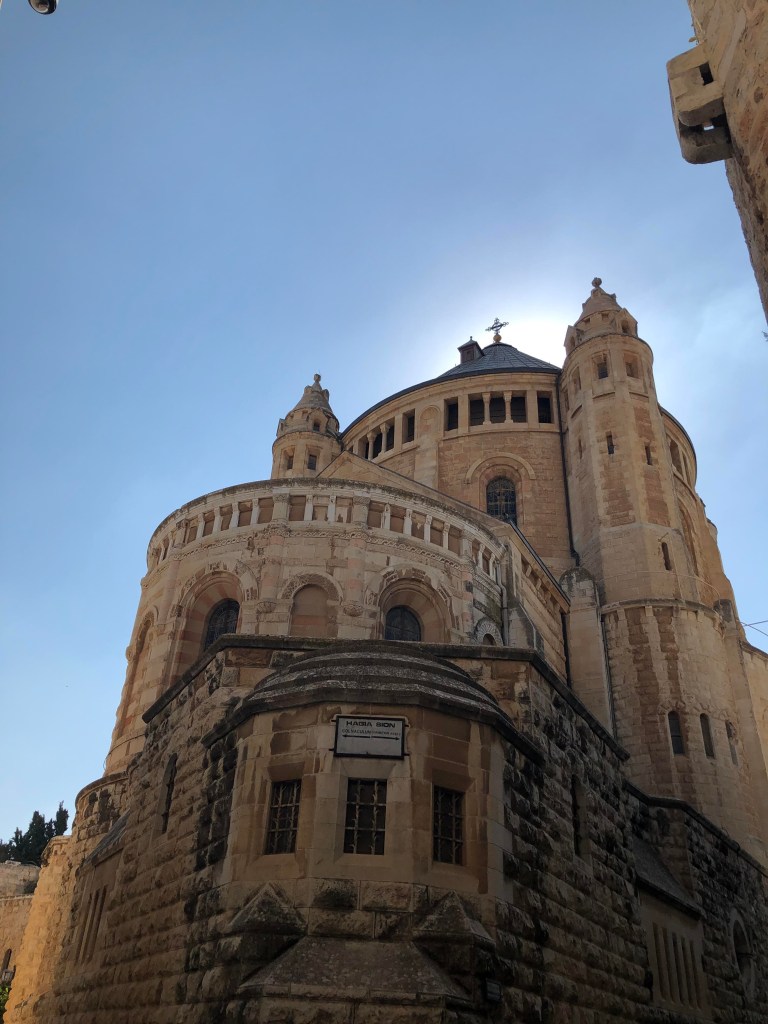
Dormition Church
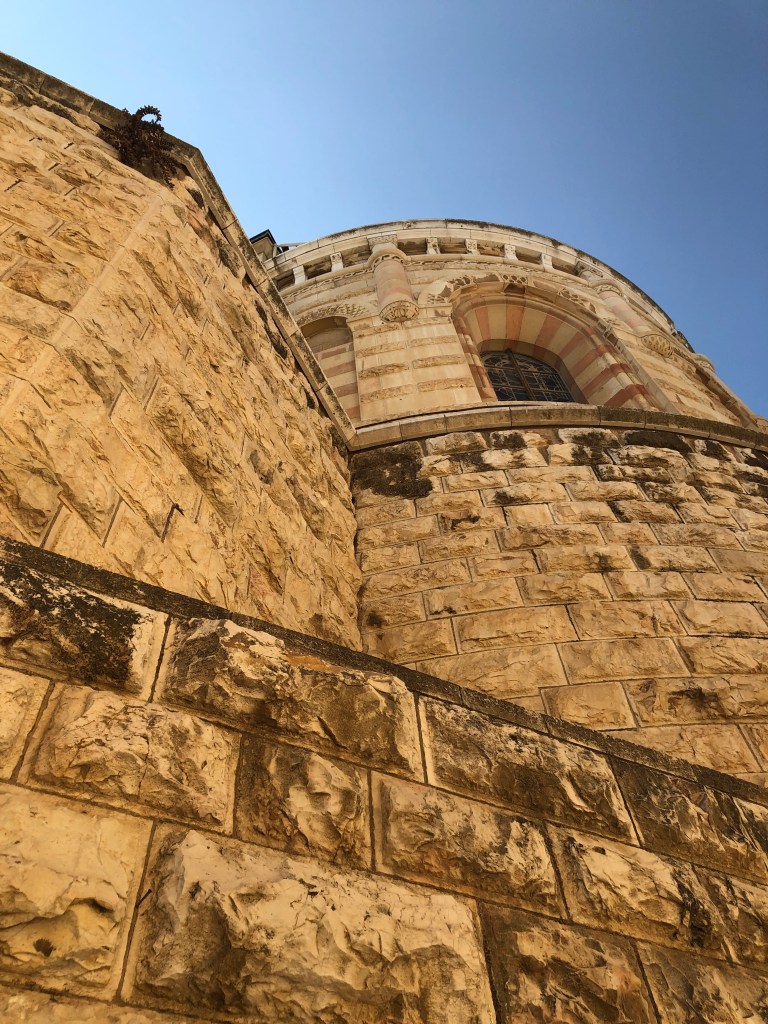
By Catholic tradition, this is where the Virgin Mary fell into an eternal sleep. You can see the round sandstone tower and Roman style arches of the Dormition Church from every inch of higher ground in Jerusalem. My favorite view of this church was from the top of the Mount of Olives.
Western Wall
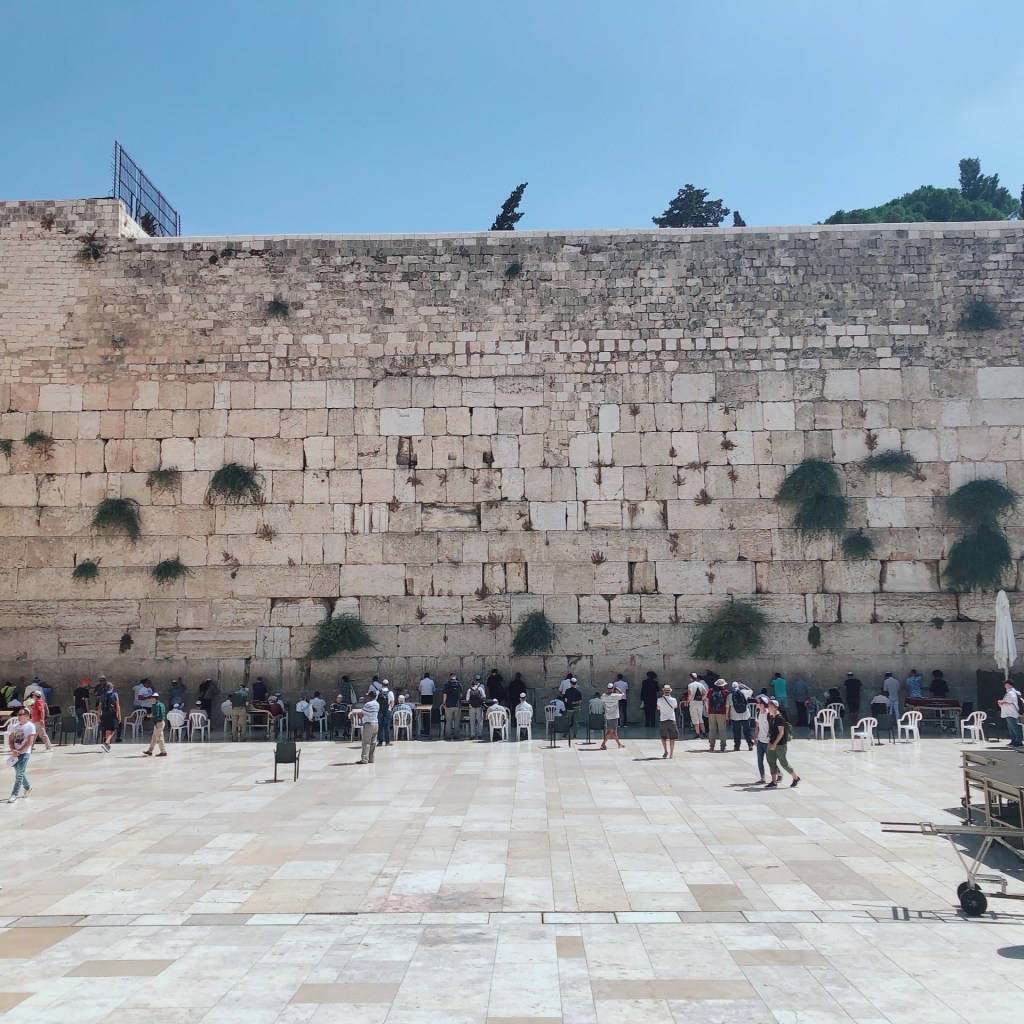
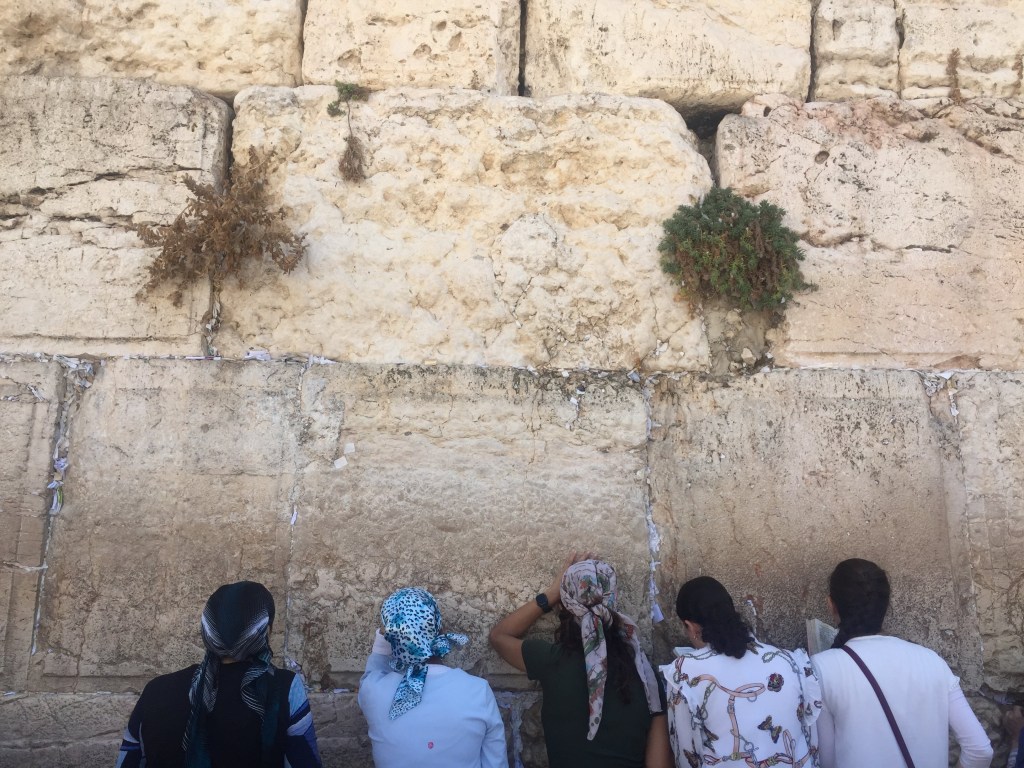
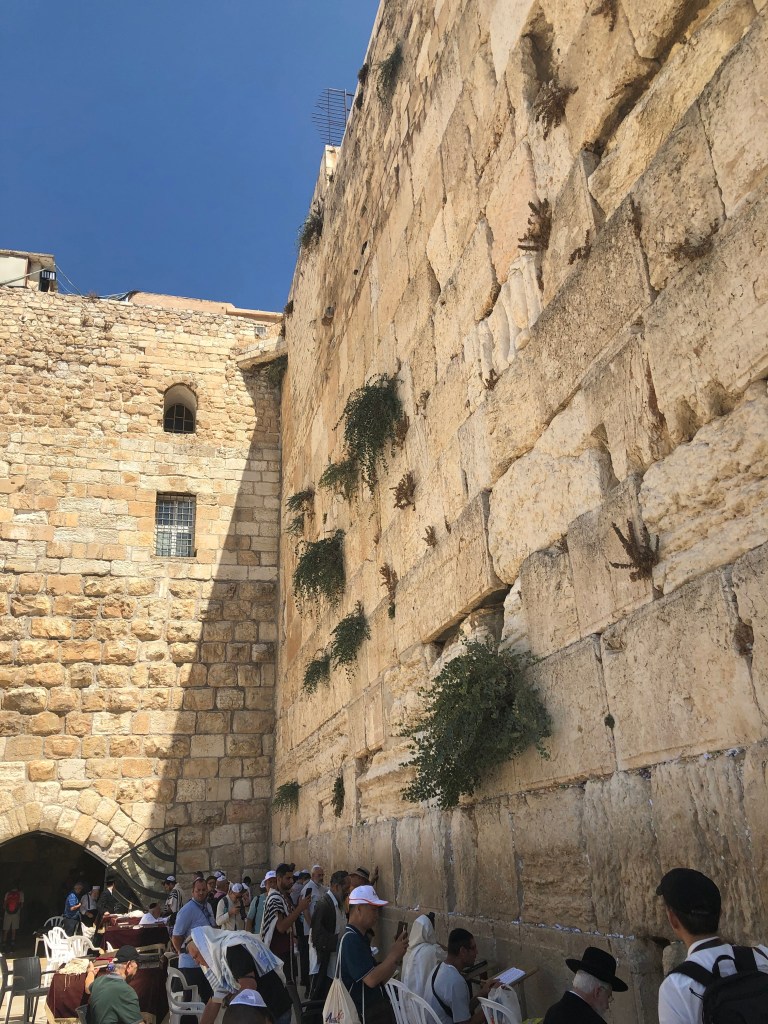
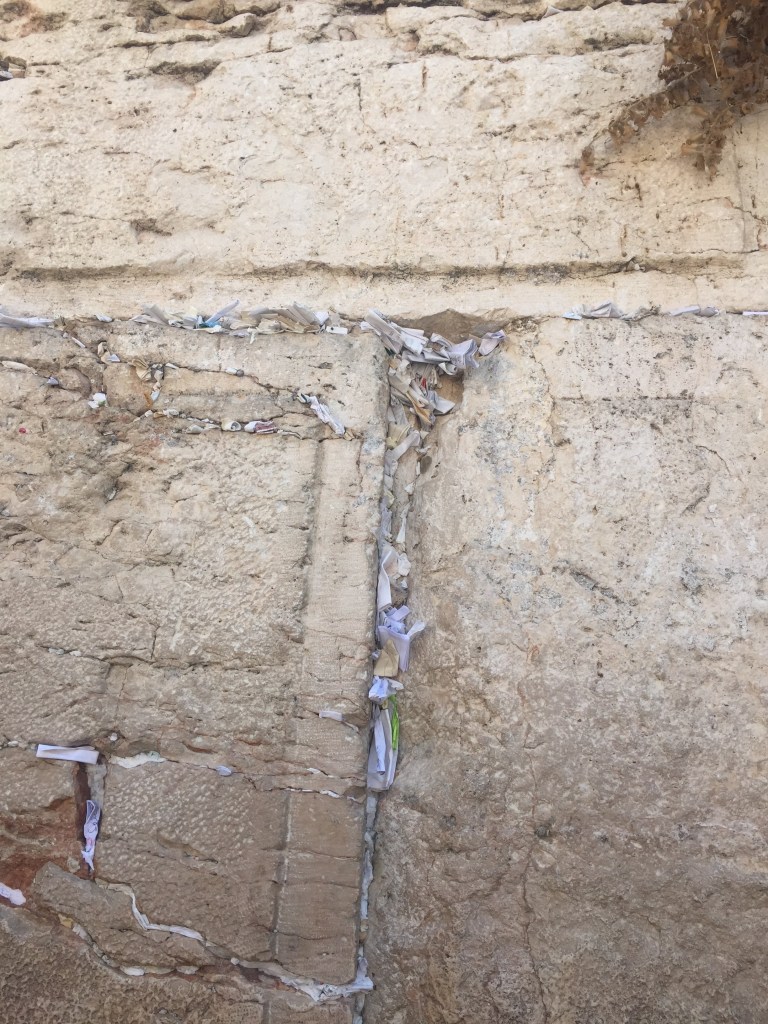
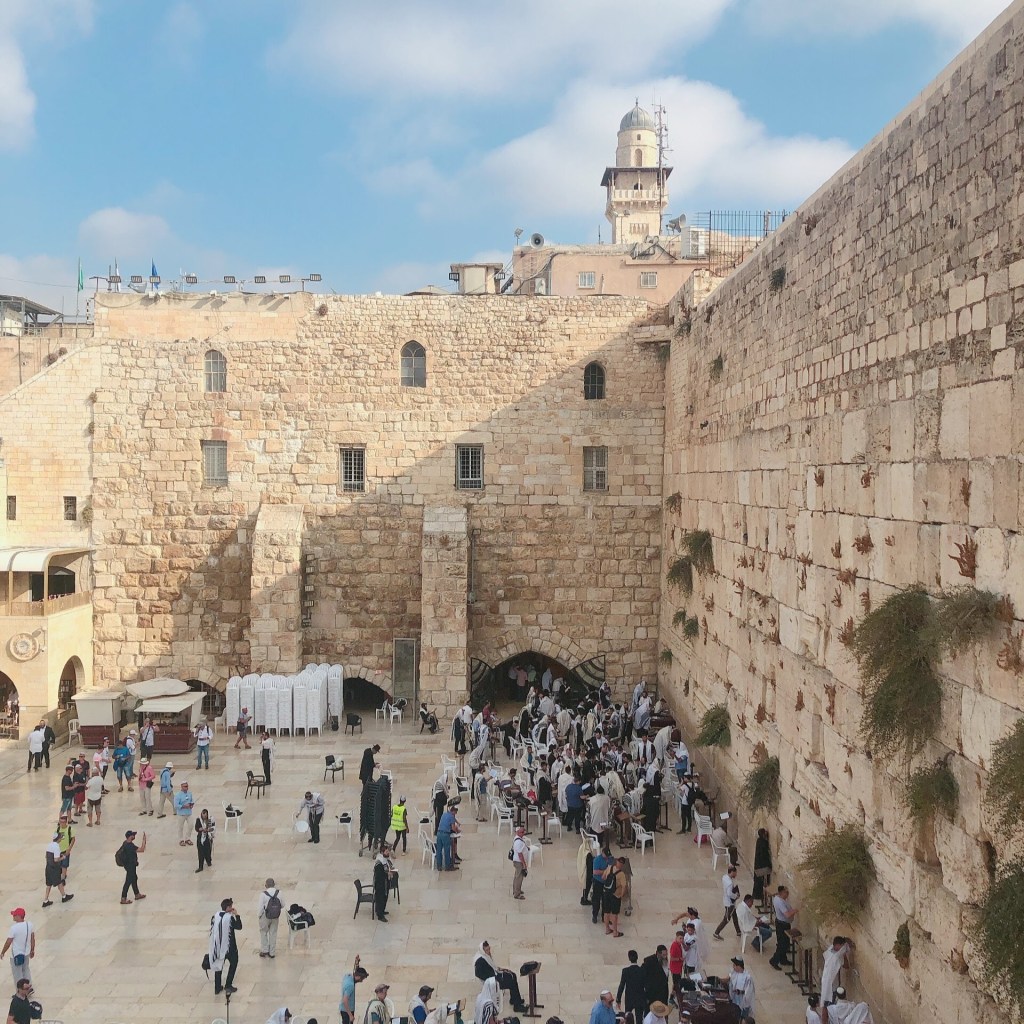
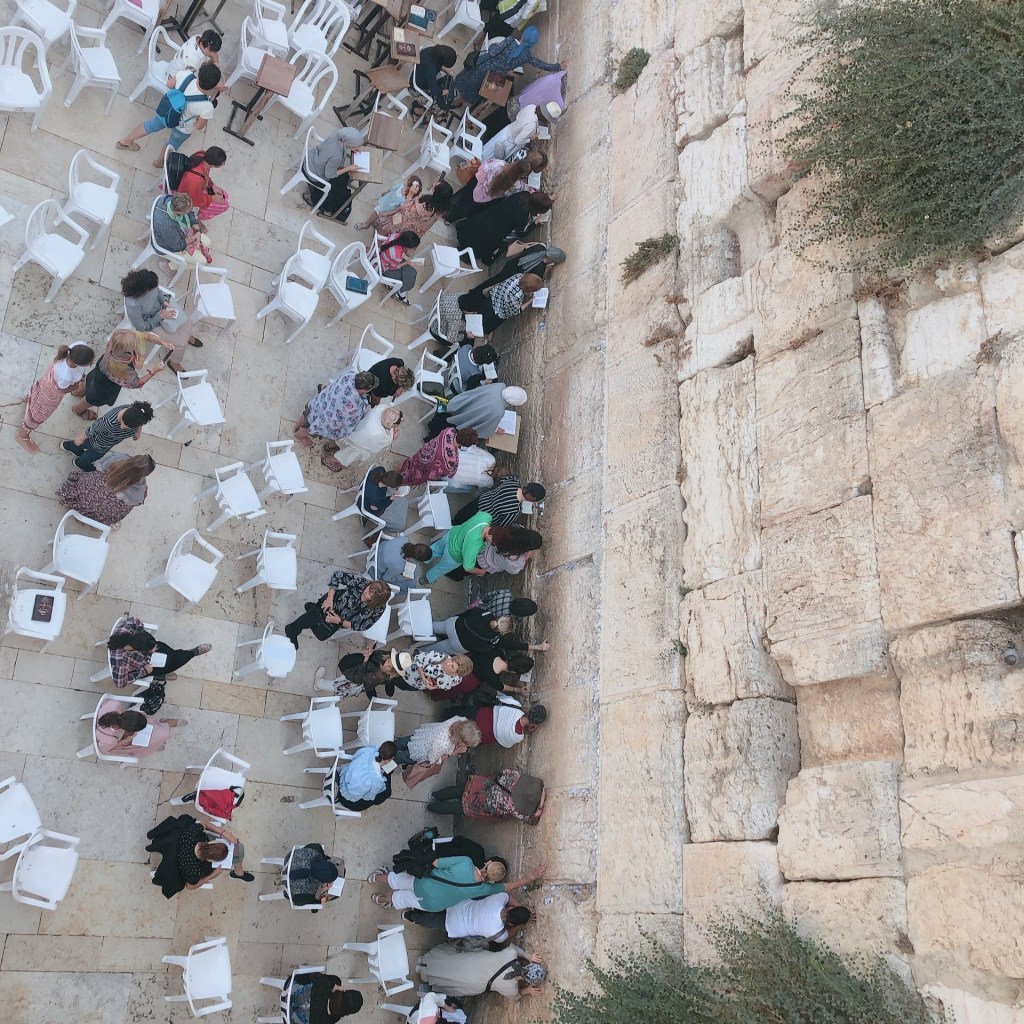
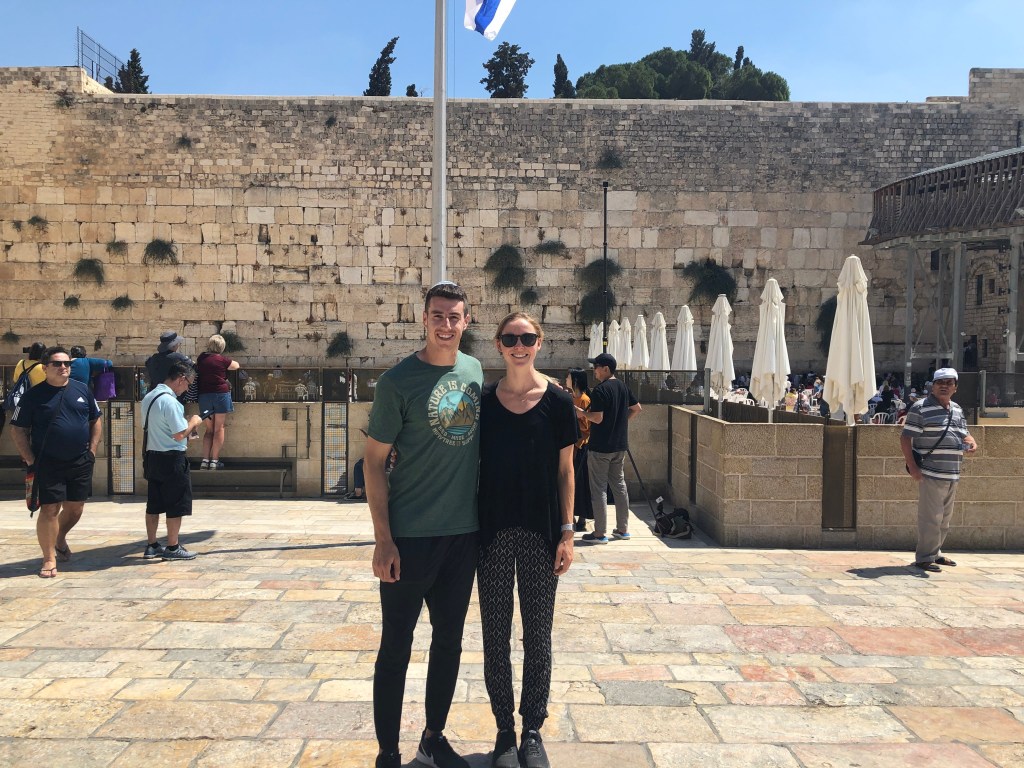
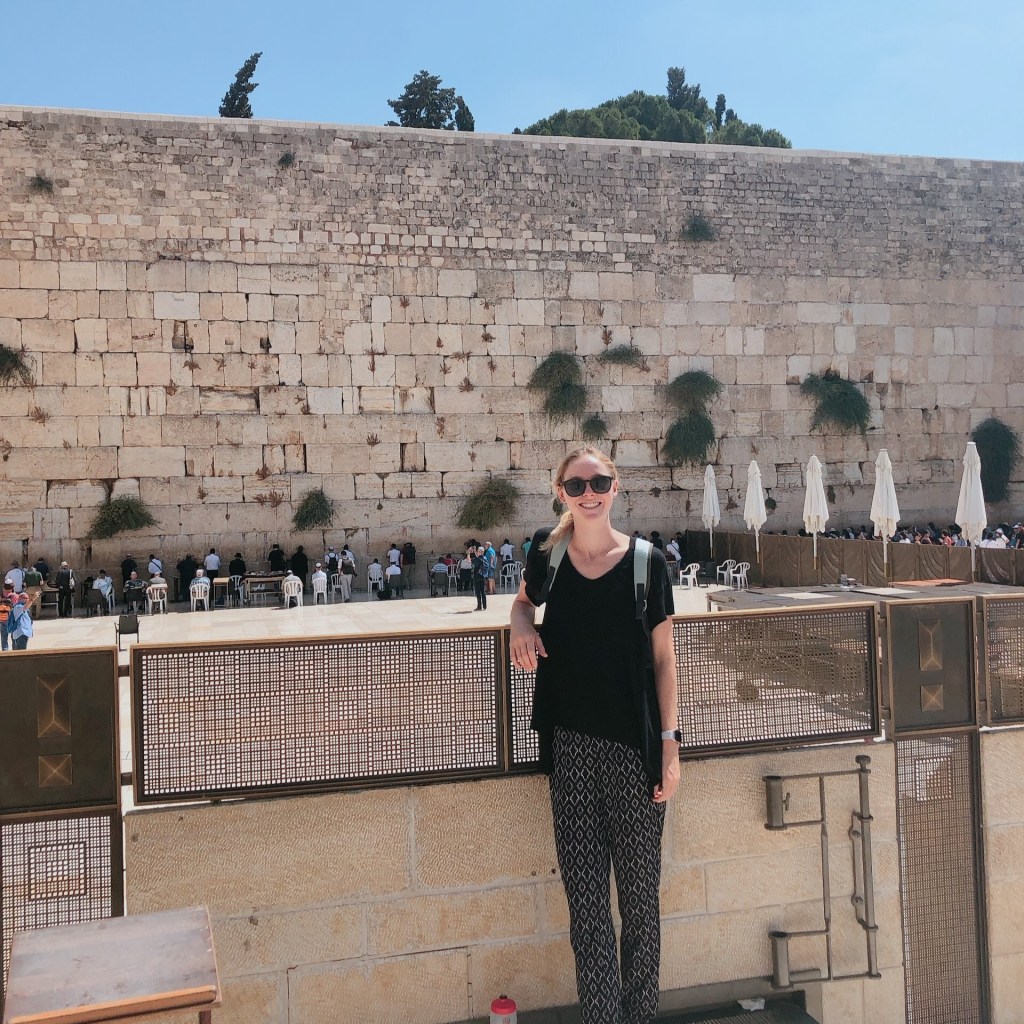
A massive wall once used to protect the ancient city, today is the holiest pilgrimage site for Judaism. Sitting at one end of the Old City, here you can witness worshippers reciting scriptures, laying their hands on 2000-year-old stone and walking slowly backwards as they leave this sacred place. The Western Wall is quite possibly where I have seen the most zealous spirituality. It was incredible to see locals and foreigners gather here together to worship and leave their prayers in the little cracks of the wall.
Temple Mount and Dome of the Rock
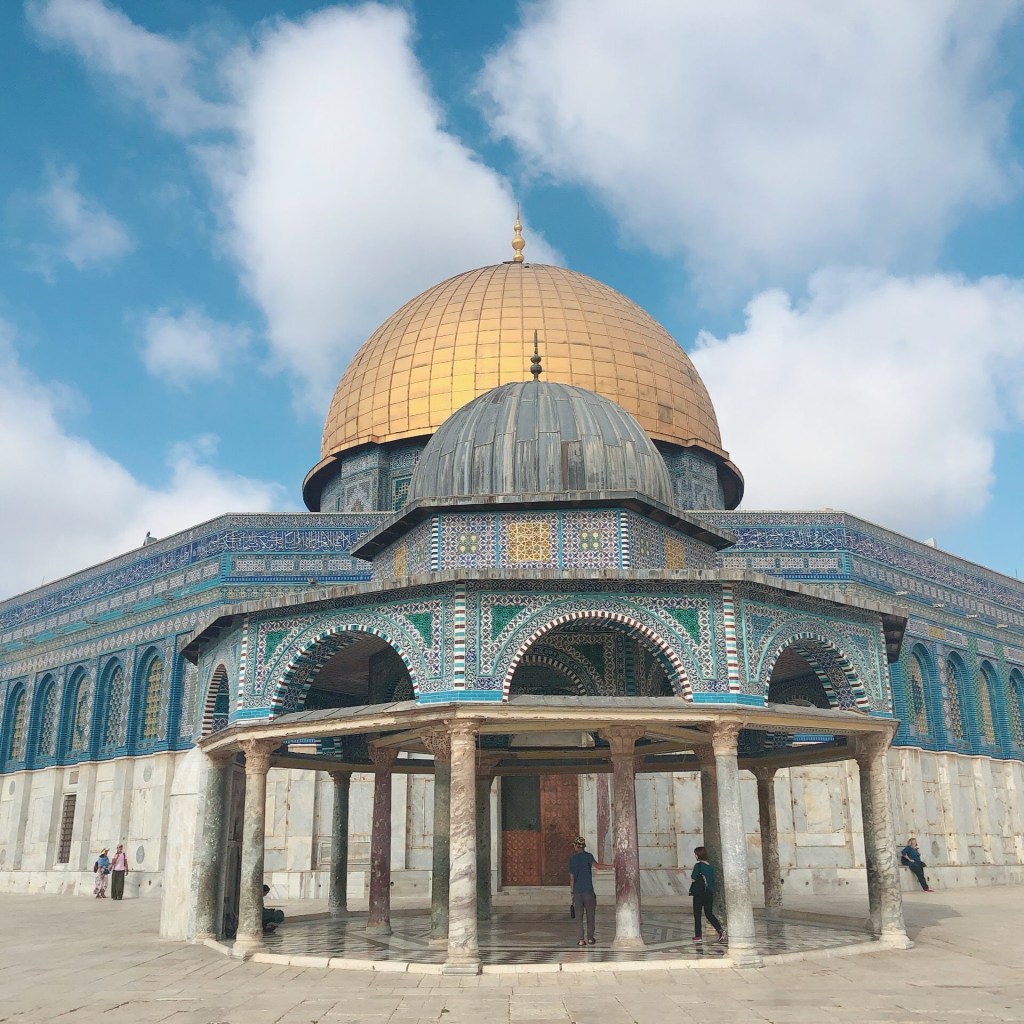
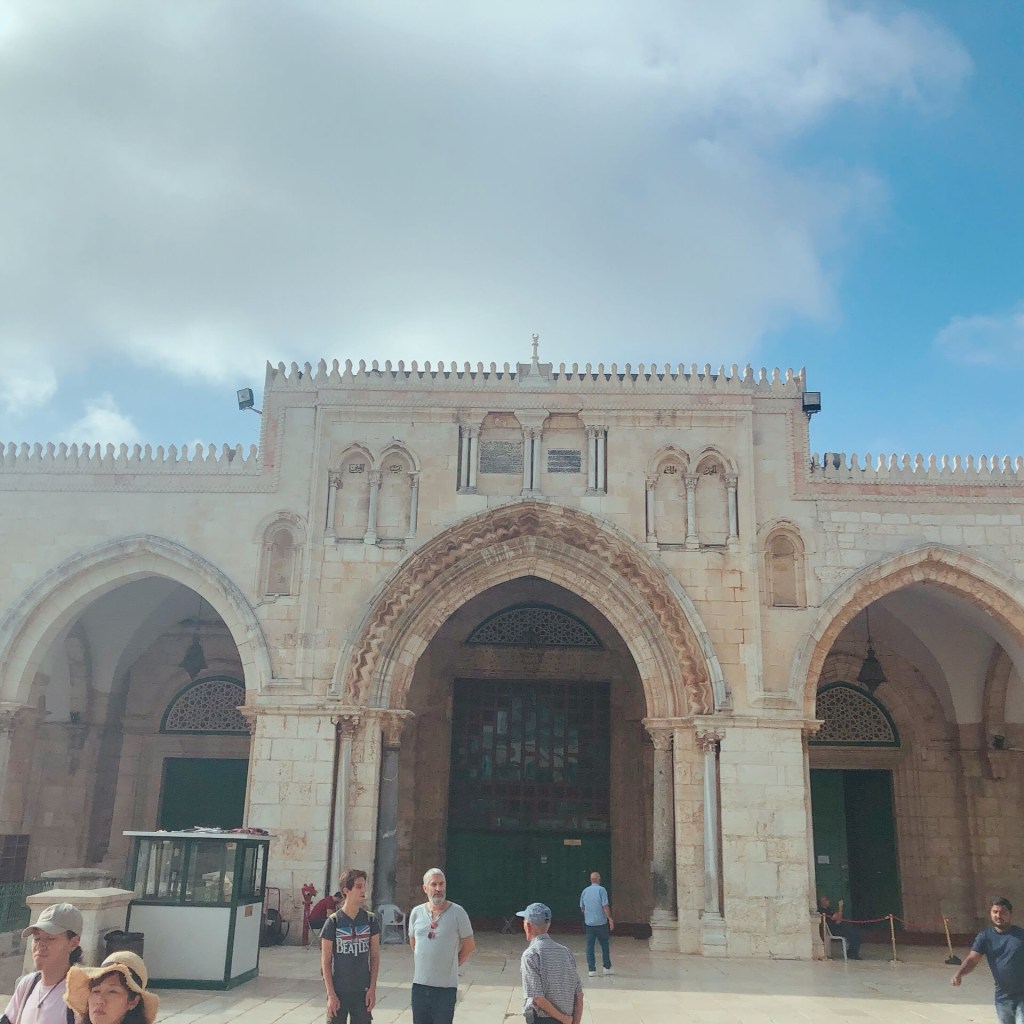
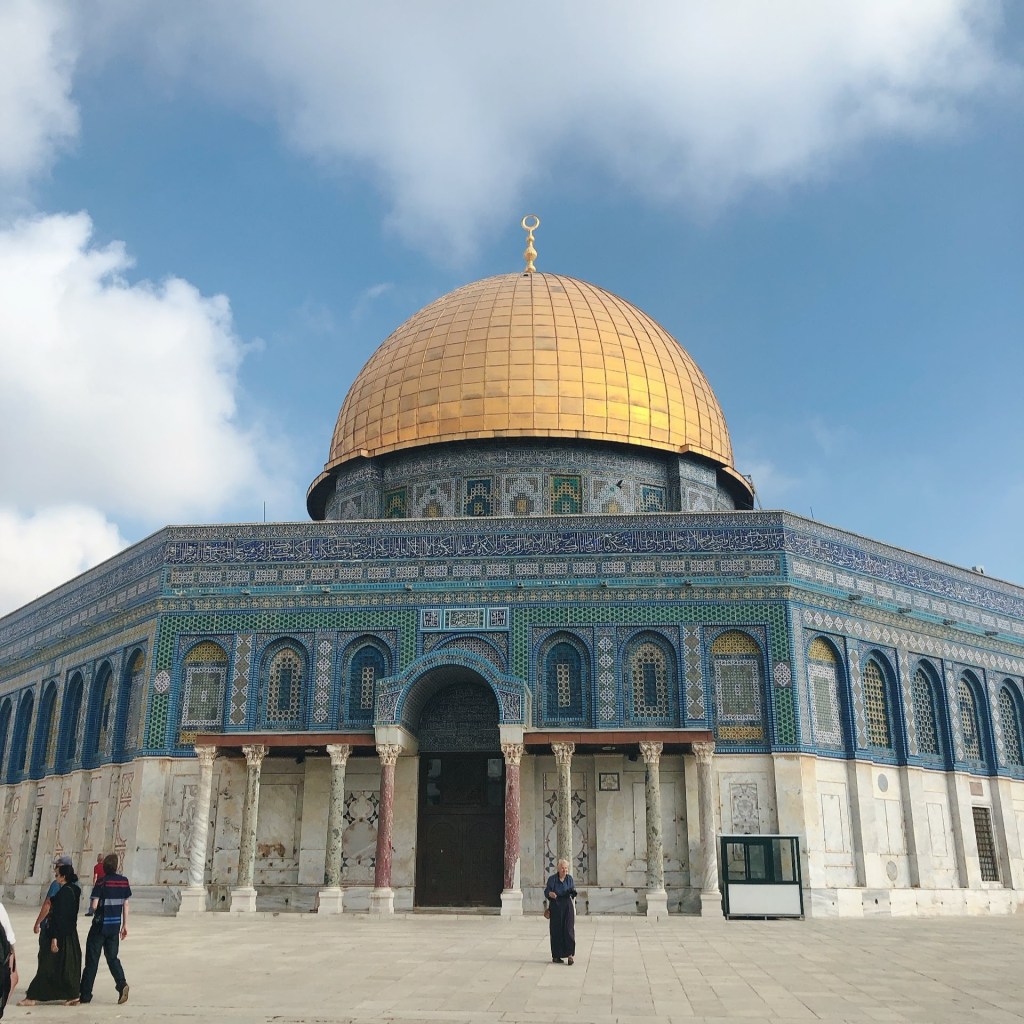
The Western Wall acts as the base of the larger Temple Mount complex, which once housed two treasured Jewish temples. Today, the Temple Mount complex is home to the massive Al-Aqsa Mosque and the stunning Dome of the Rock. Although it is still considered a Jewish holy site, today many Orthodox Jewish authorities forbid Jews to visit Temple Mount.
The Temple Mount is a controversial and culturally significant place. Being home to holy sites belonging to different religions there is bound to be disagreement. It’s a regular flashpoint for protests & violence between Jews and Arabs.
The Temple Mount is the third holiest site in Islam after Mecca and Medina. It is here that the Prophet Muhammad ascended to heaven in Islamic tradition. Known to Jews as Har Habayit, this site is revered by Jews as the location of the First and Second Temples. For Christians, the steps at the southern end of the Temple Mount are believed to be where Jesus would teach his disciples. Christians find the Temple Mount significant because Jesus prayed daily at the temple that was located there. So like most other sites in Jerusalem, the religious diversity explodes from the seams.
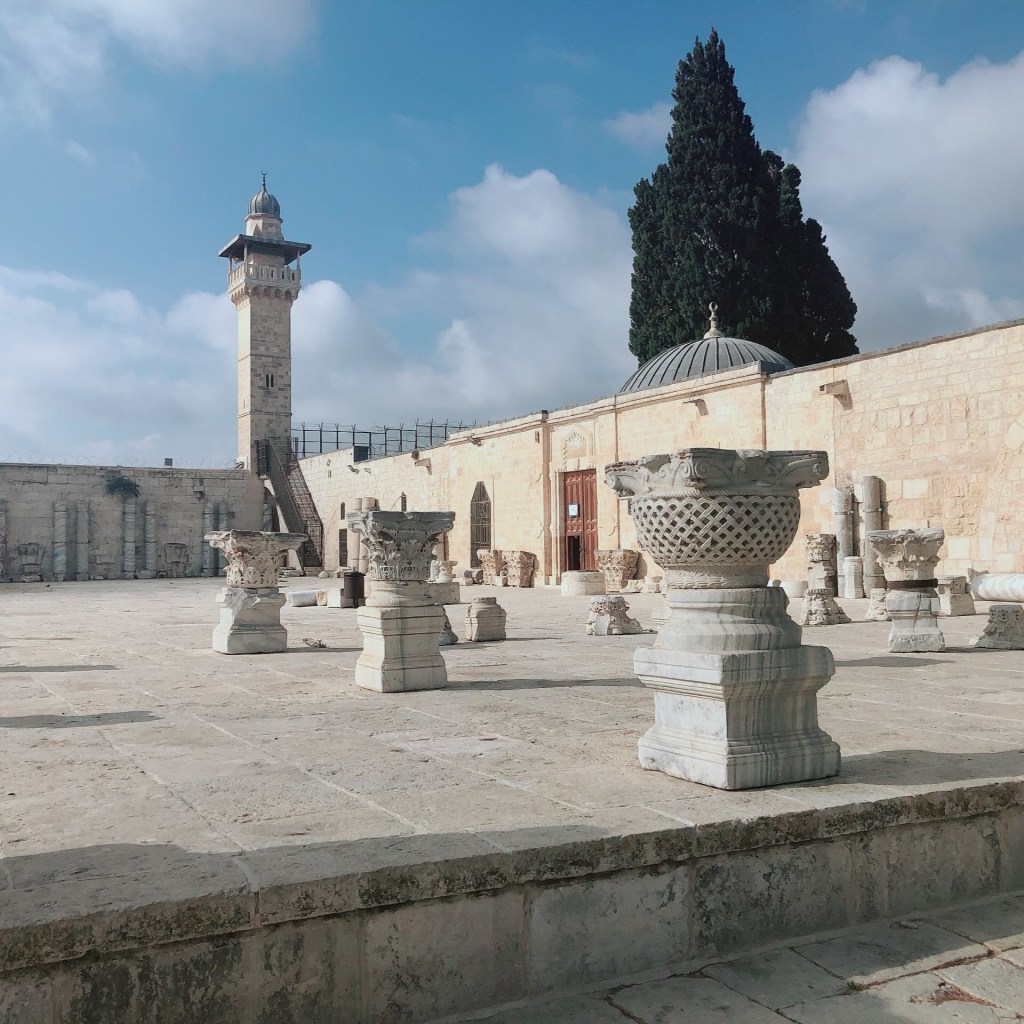
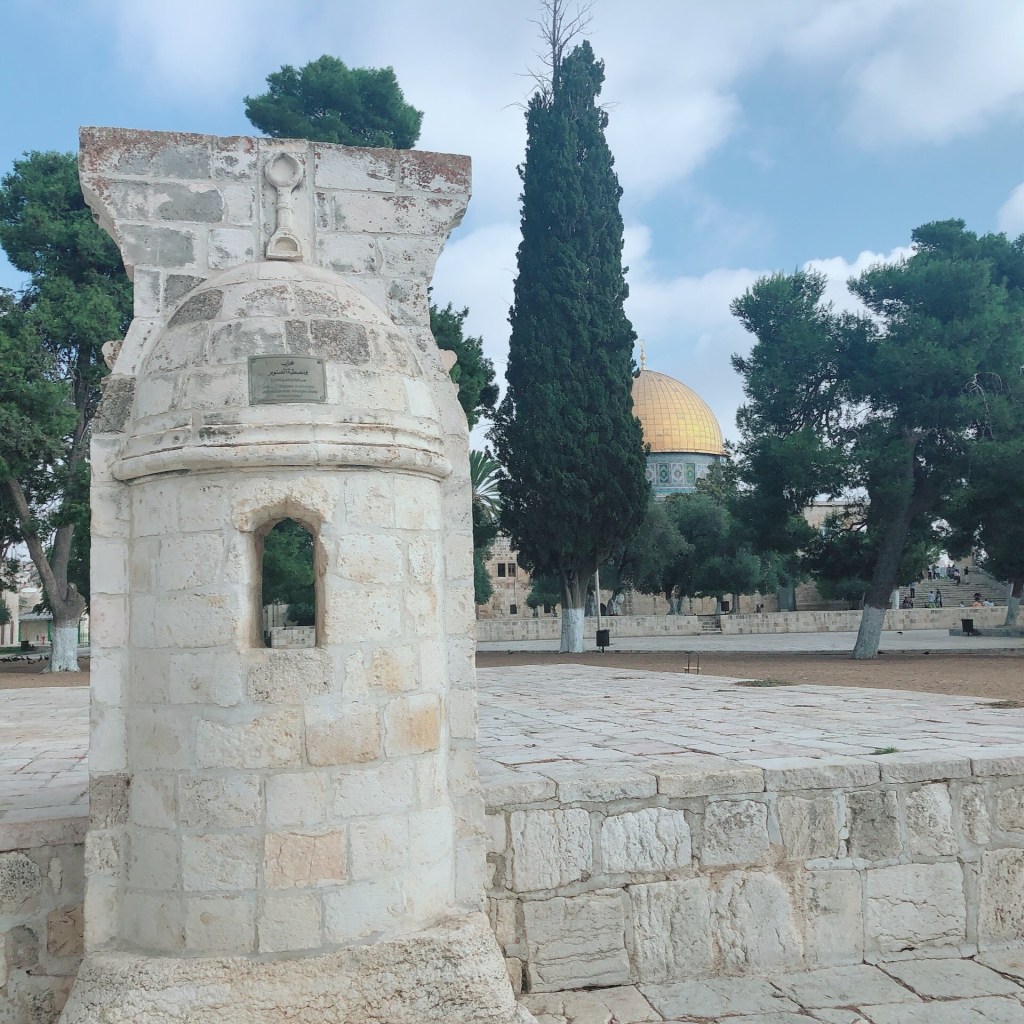
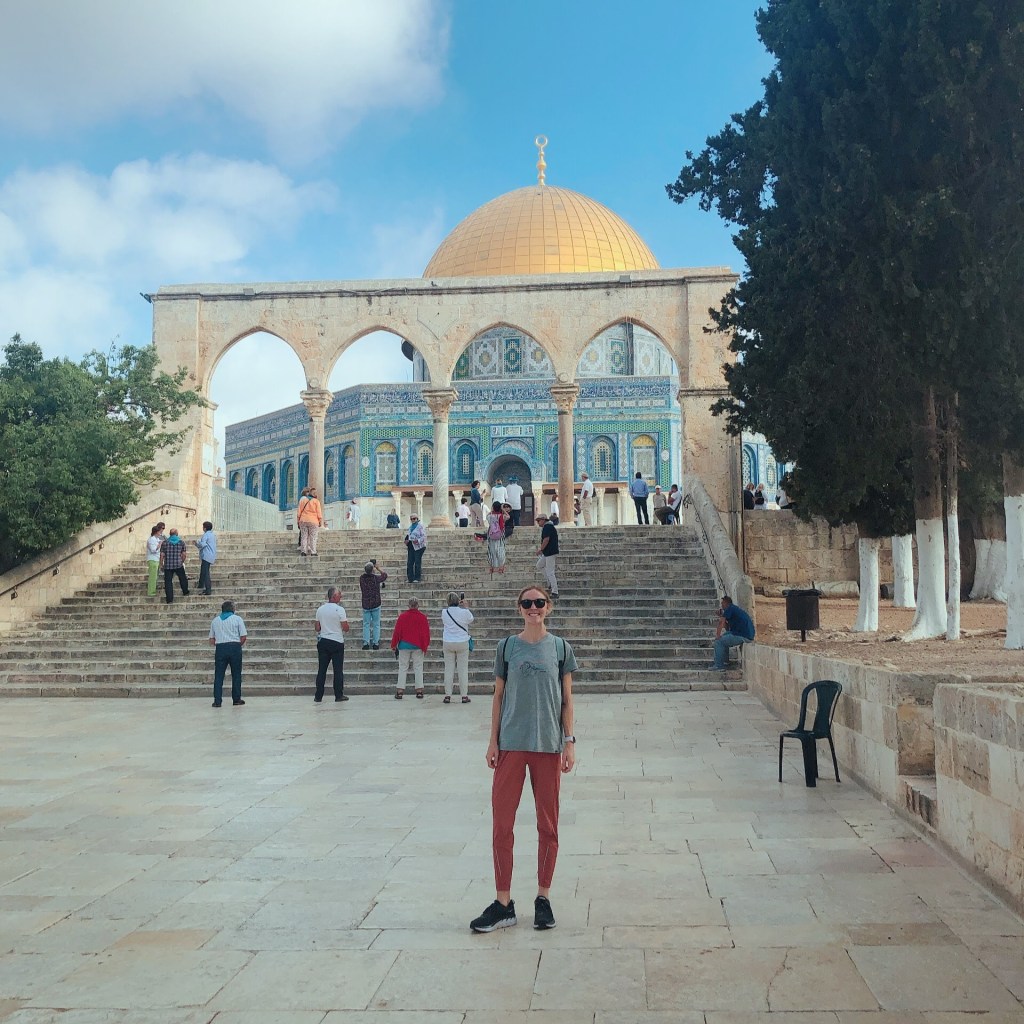
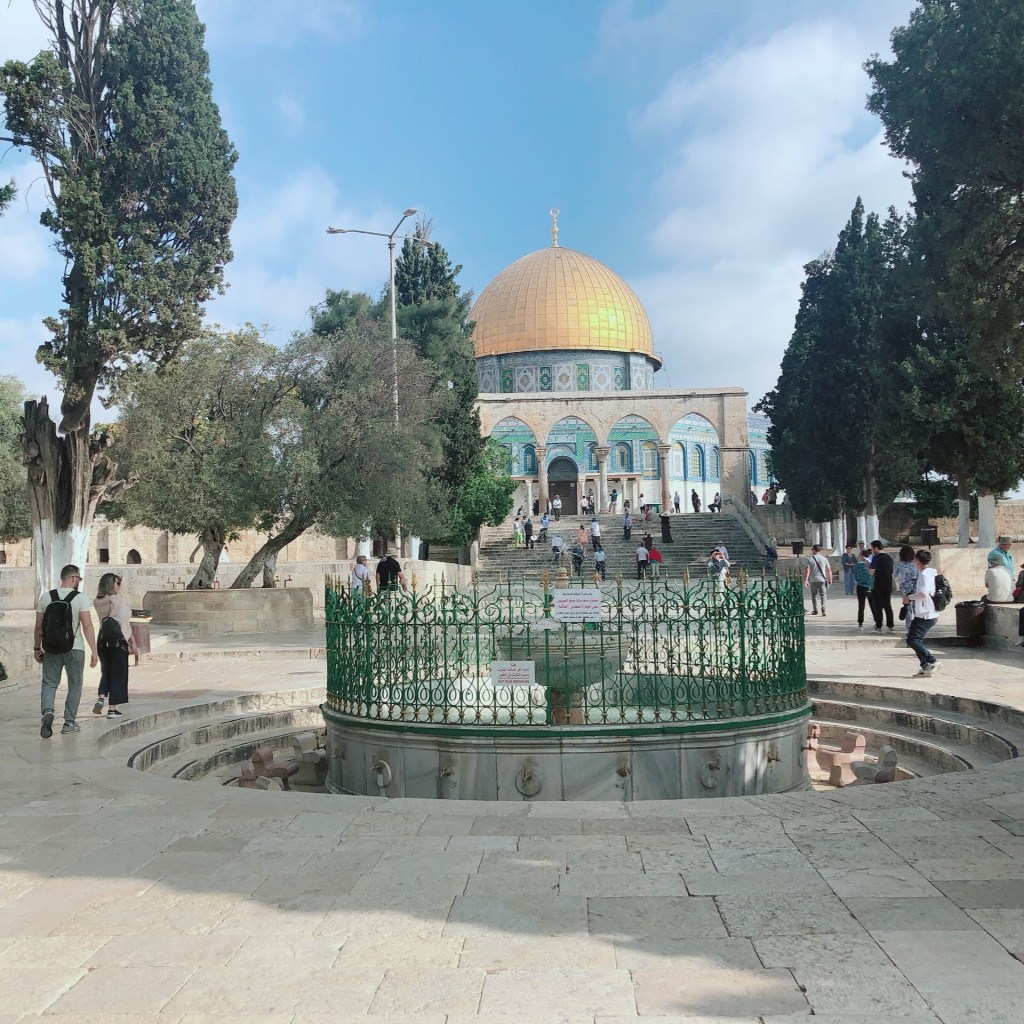
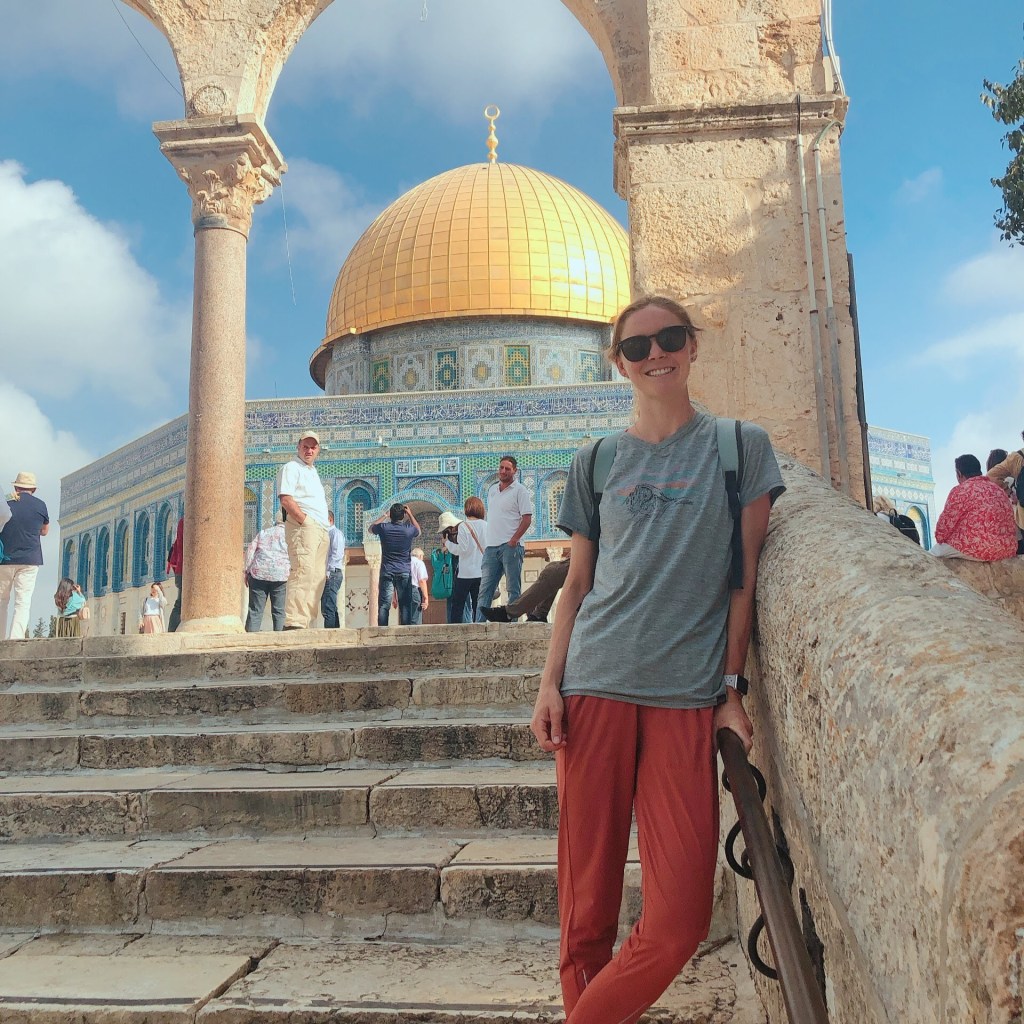
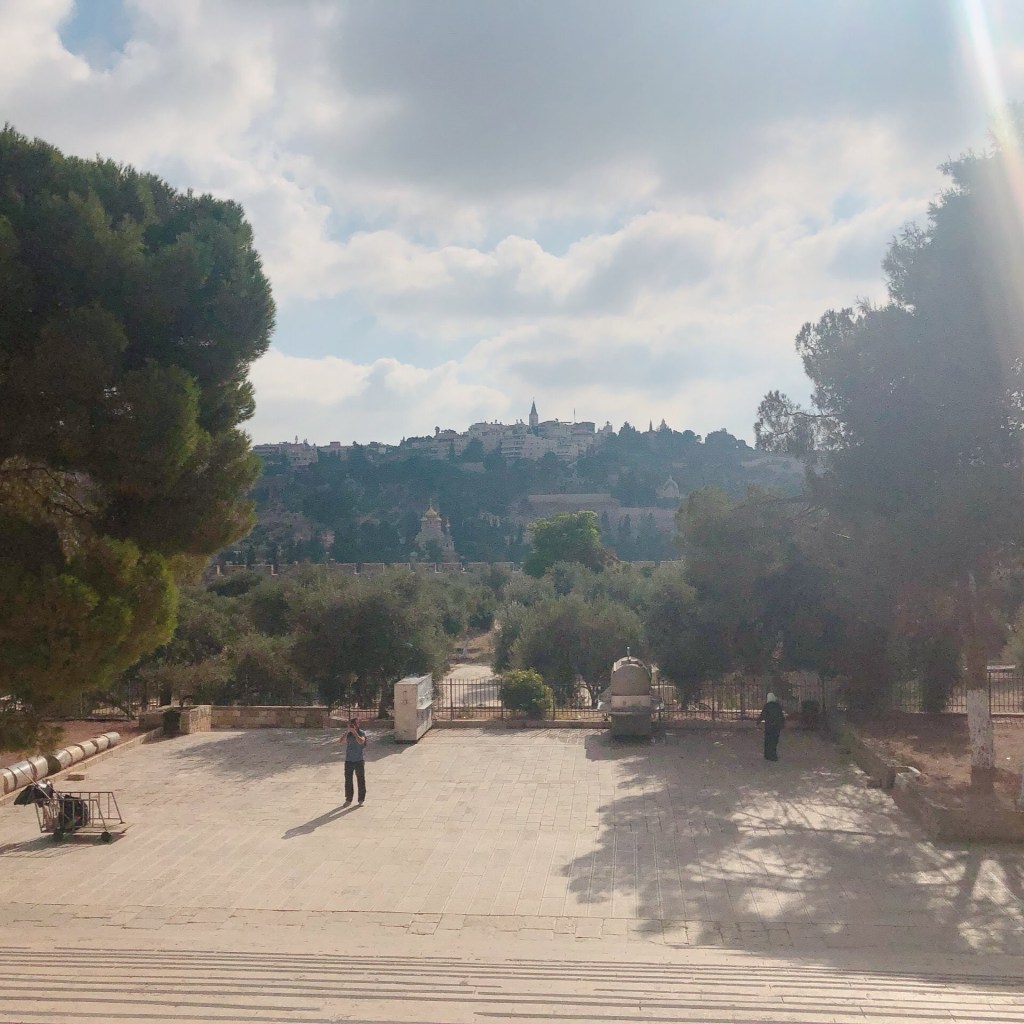
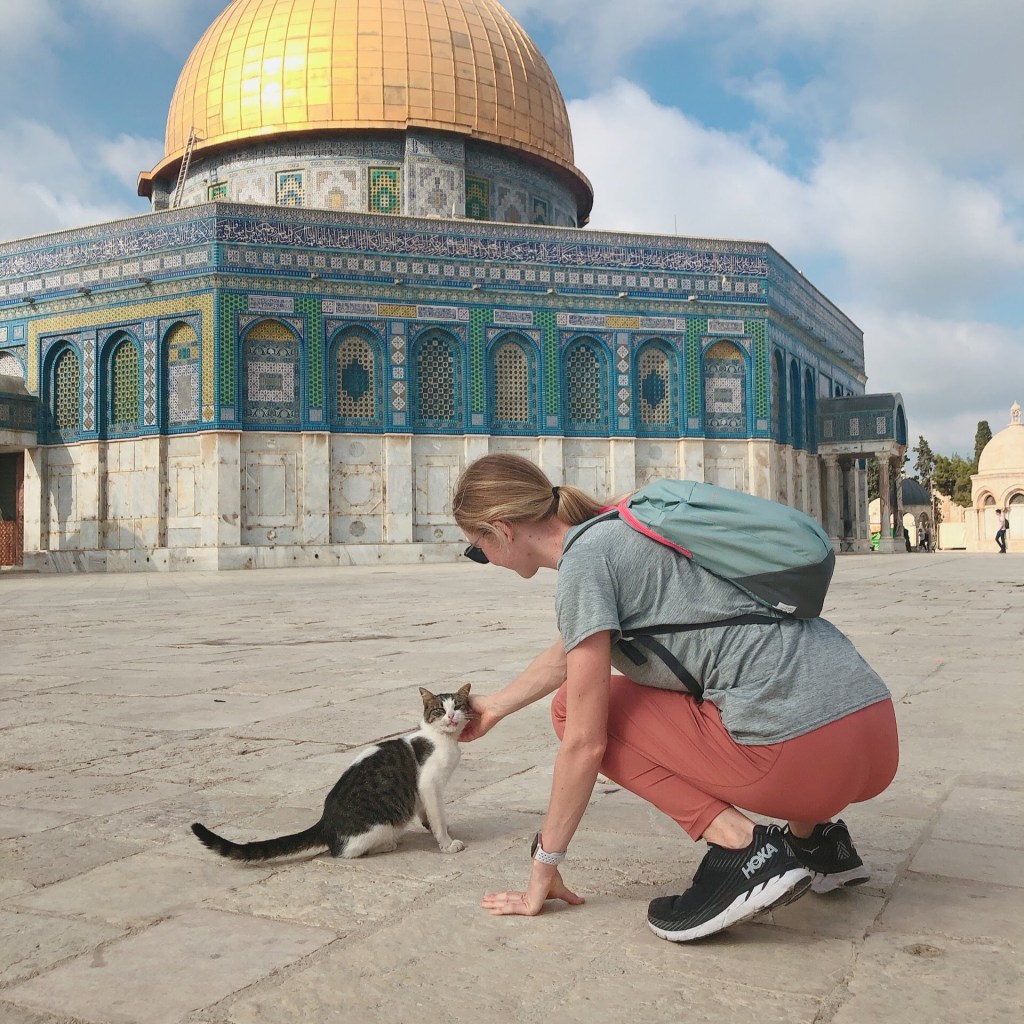
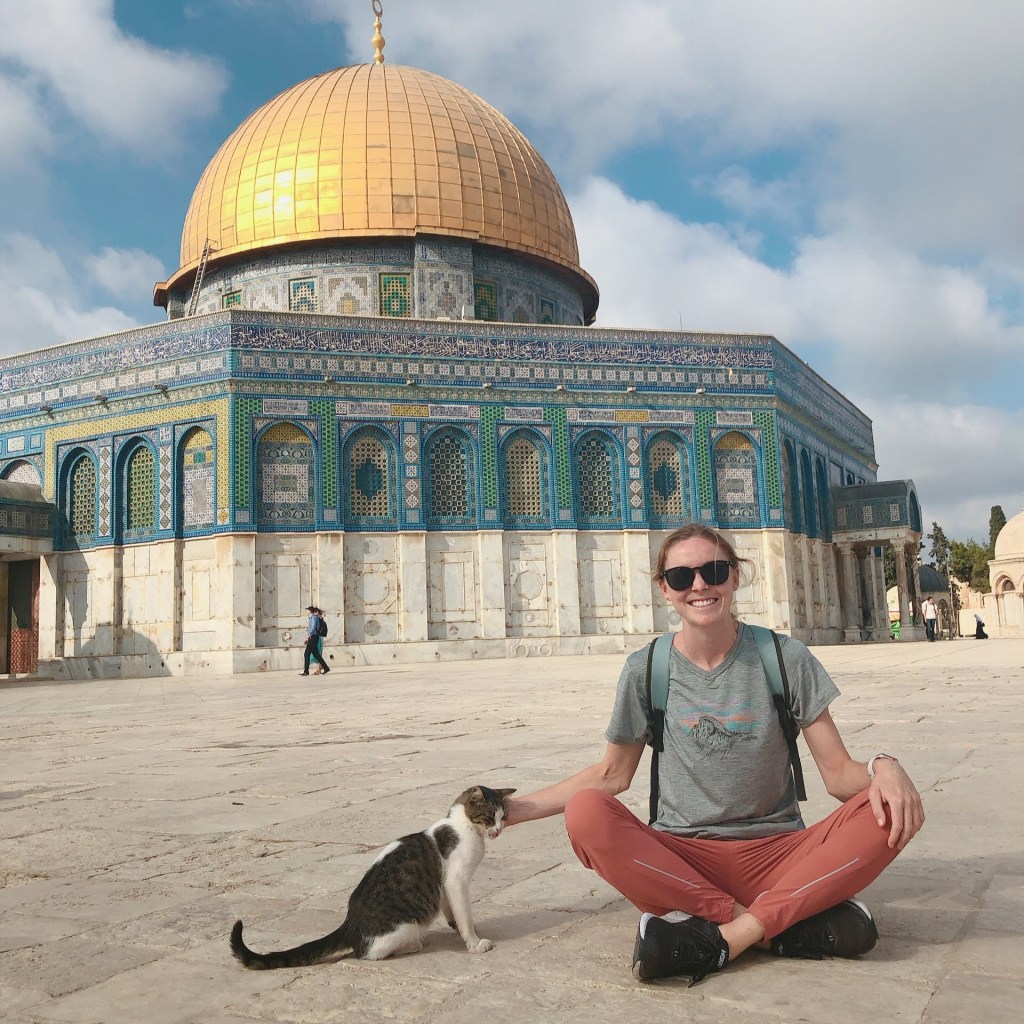
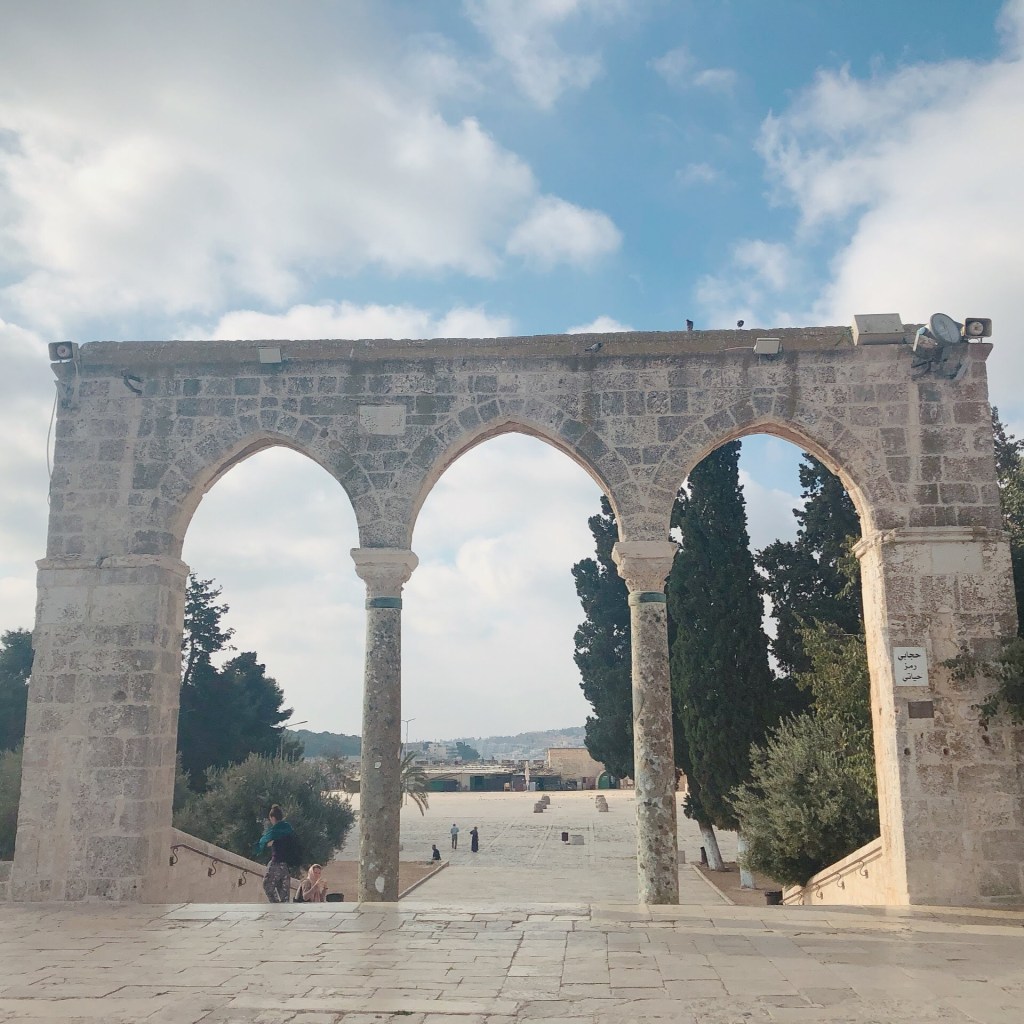
This elevated plaza in the corner of the Old City is home to the Dome of the Rock. A gold-plated temple acting as the enduring symbol of the city and one of the most photographed buildings on earth. Our trip to the Dome of the Rock was luckily peaceful, no riots and the security was simple. We shared the plaza with a number of adorable cats, reveled at the incredible gold plated dome, and looked out at the Mount of Olives in the distance.
Mount of Olives
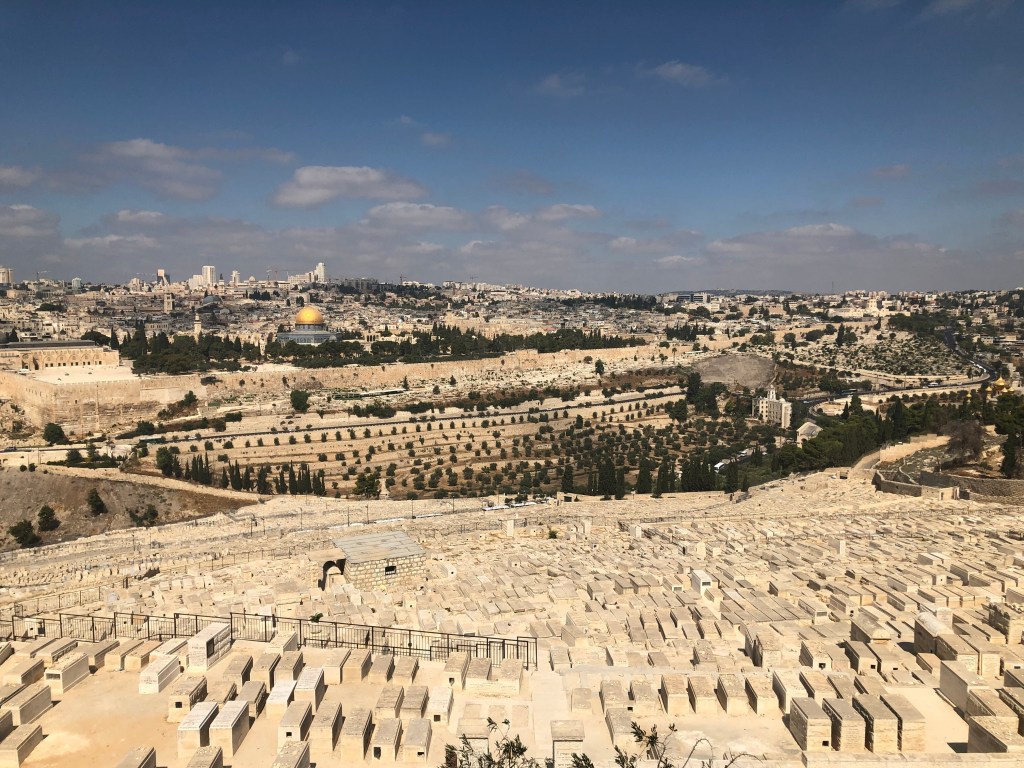
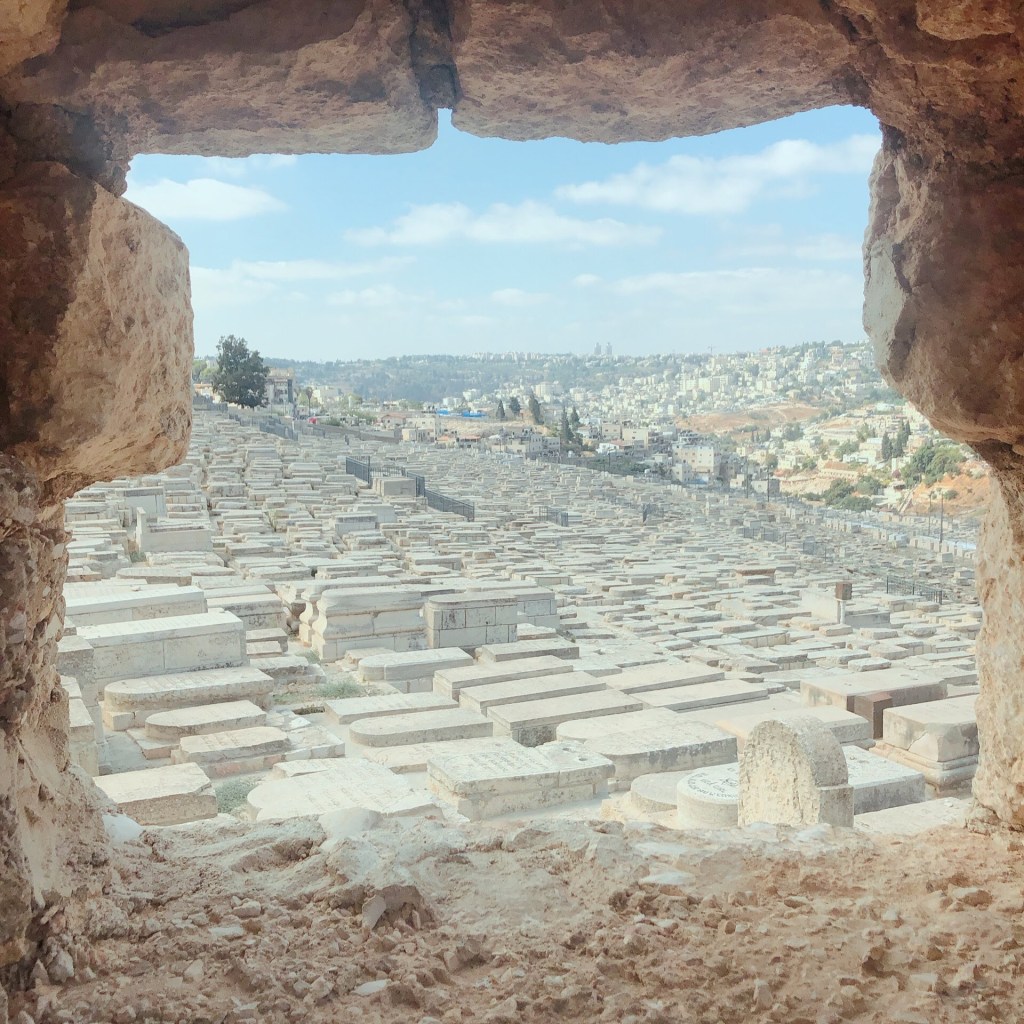
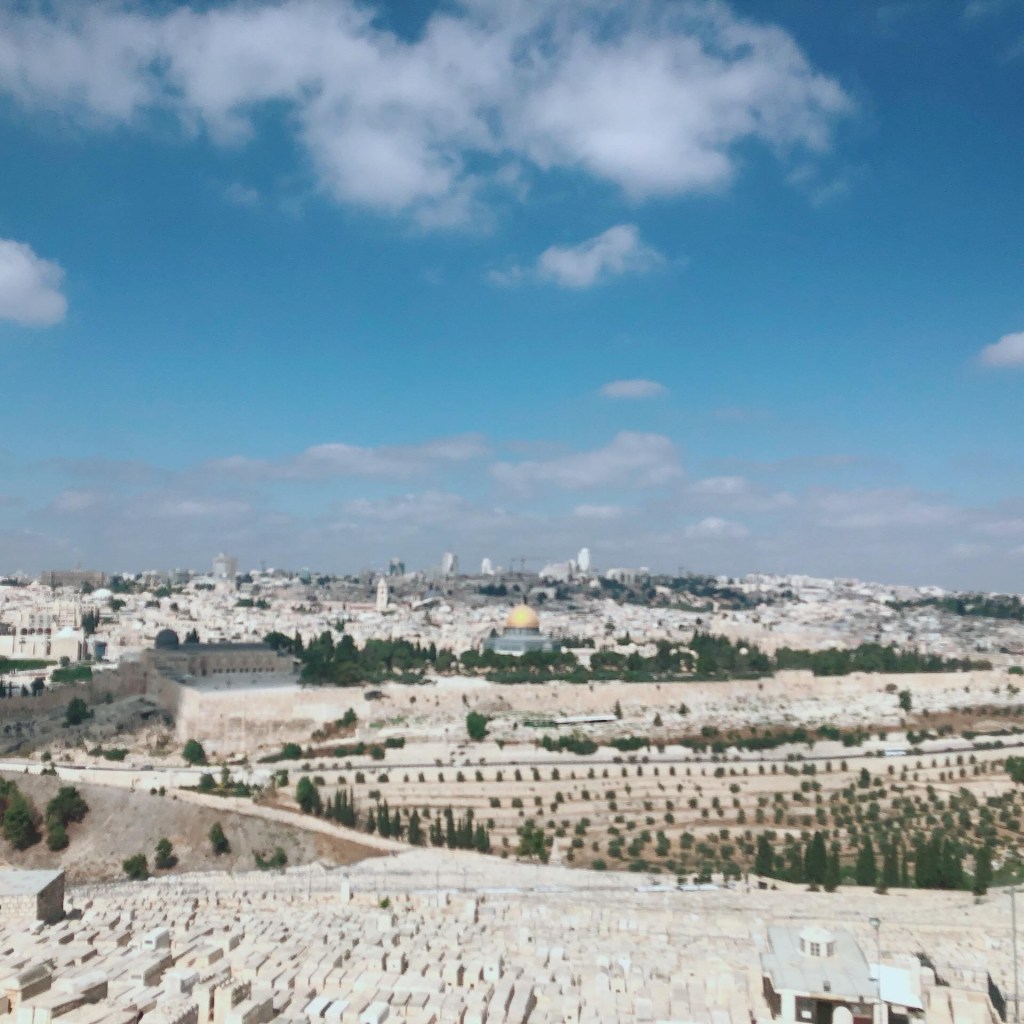
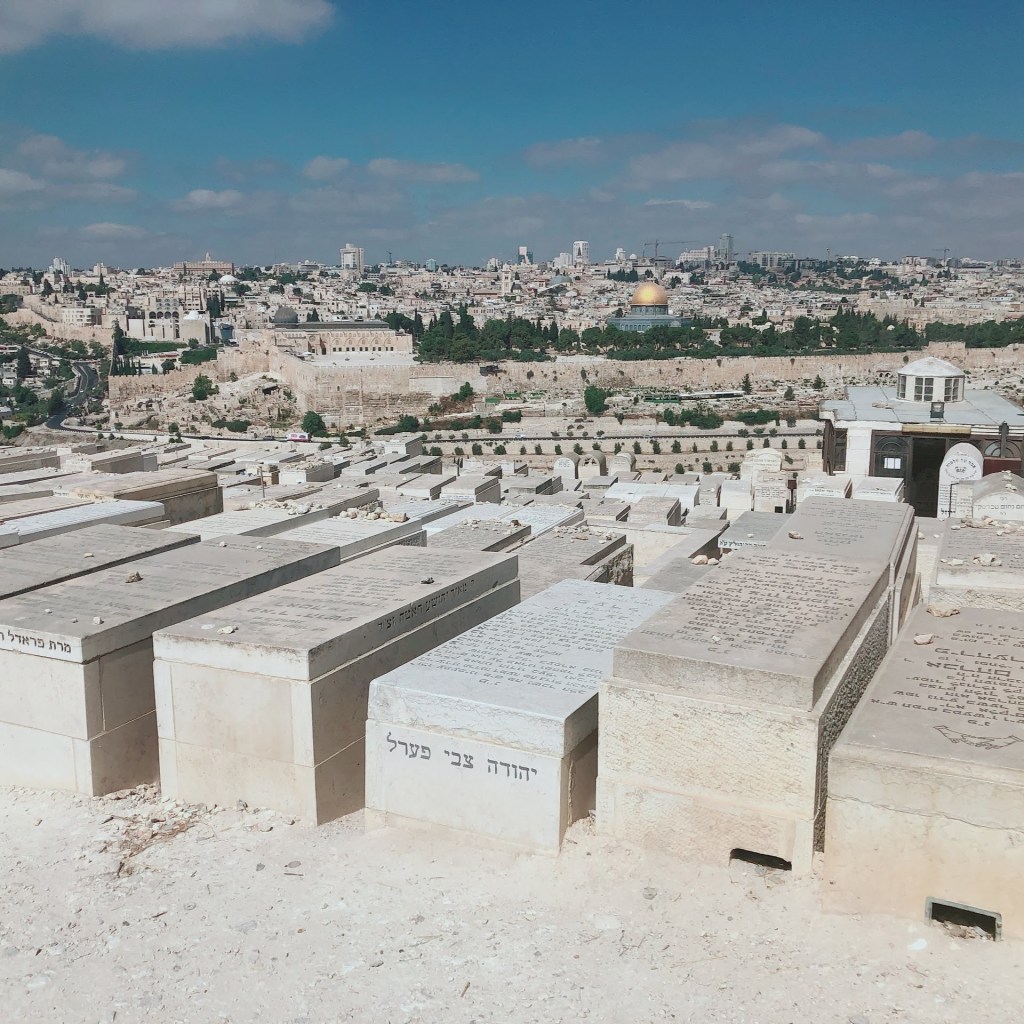
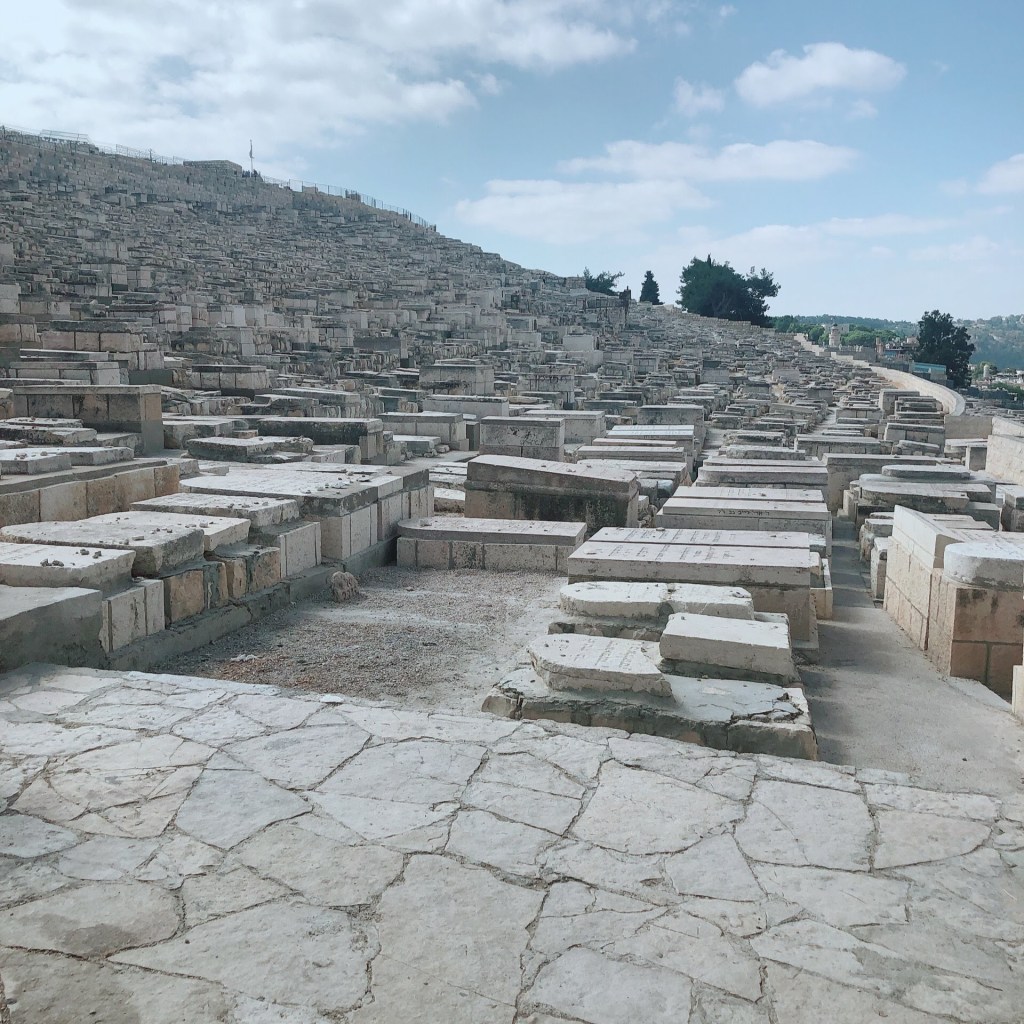
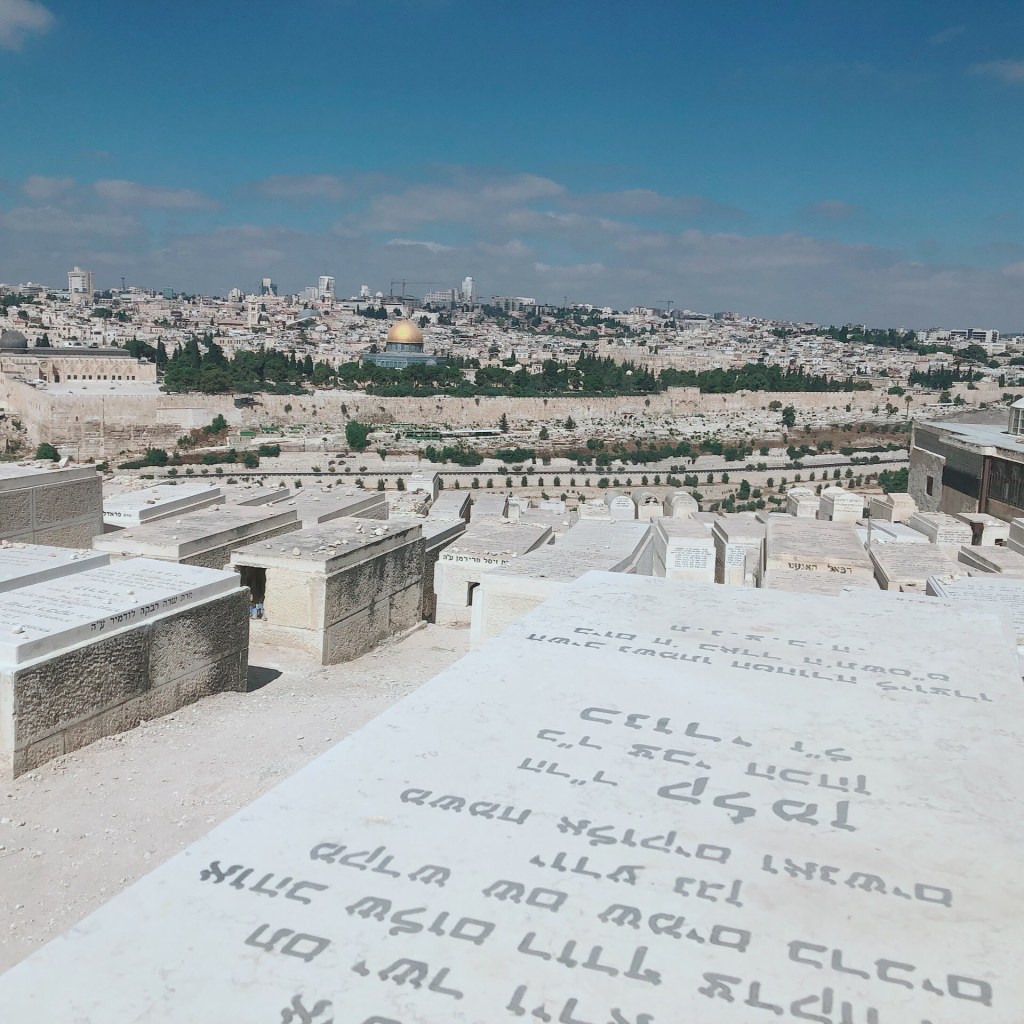
Like many key sites in Jerusalem, the Mount of Olives holds significance for multiple faiths and traditions. Named for the olive trees that once grew in abundance there, it is perched on a ridge just outside of the Old City and is the oldest cemetery still in use today. As you climb the streets to the top of the mountain, you can look out into the distance and witness mourners, see burials being prepared, and you can read tomb sites dating back hundreds and even thousands of years. The Mount of Olives contains around 150,000 graves and has been a Jewish burial ground for 3,000 years. The site also commemorates the events that, according to the Christian faith, led to Jesus’s resurrection. The Virgin Mary’s Tomb, the Church of Mary Magdalene, the Tomb of Zechariah, The Church of All Nations, and the Garden of Gethsemane are all located here.
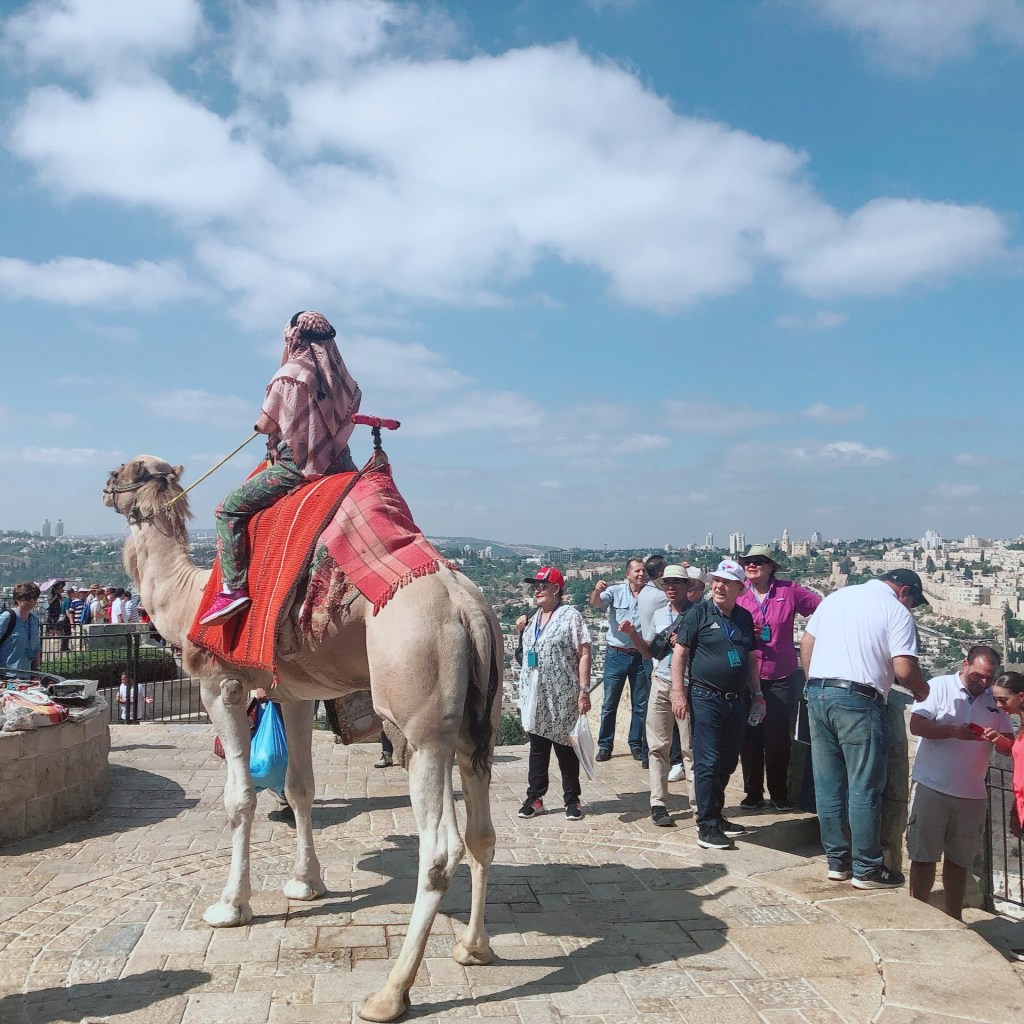
Our visit to the Mount of Olives was incredible. The vast amount of space and the number of grave sites is inexplainable. I was amazed to learn that the waiting list for this grave site is massive and the cost to be buried here starts around $22,500. The hike from the bottom of the Mount of Olives is a bit brutal, but I wouldn’t have chosen to experience it any other way. As the tours walked down, we walked in the opposite direction and were able to experience just how big this place really is. We also were able to find the Tombs of the Prophets. A sneaky little cave, lit only by candles, that supposedly is the grave site of the last three Jewish prophets. Quite spooky if you ask me.
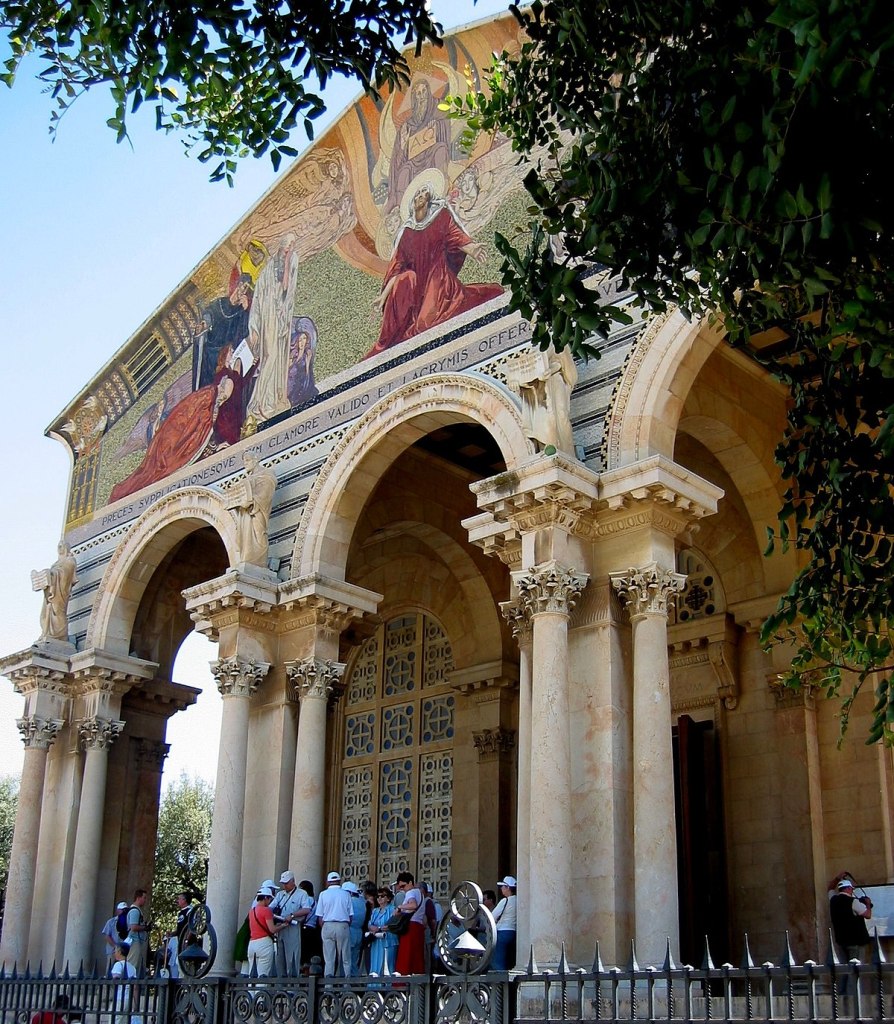
Church of all Nations
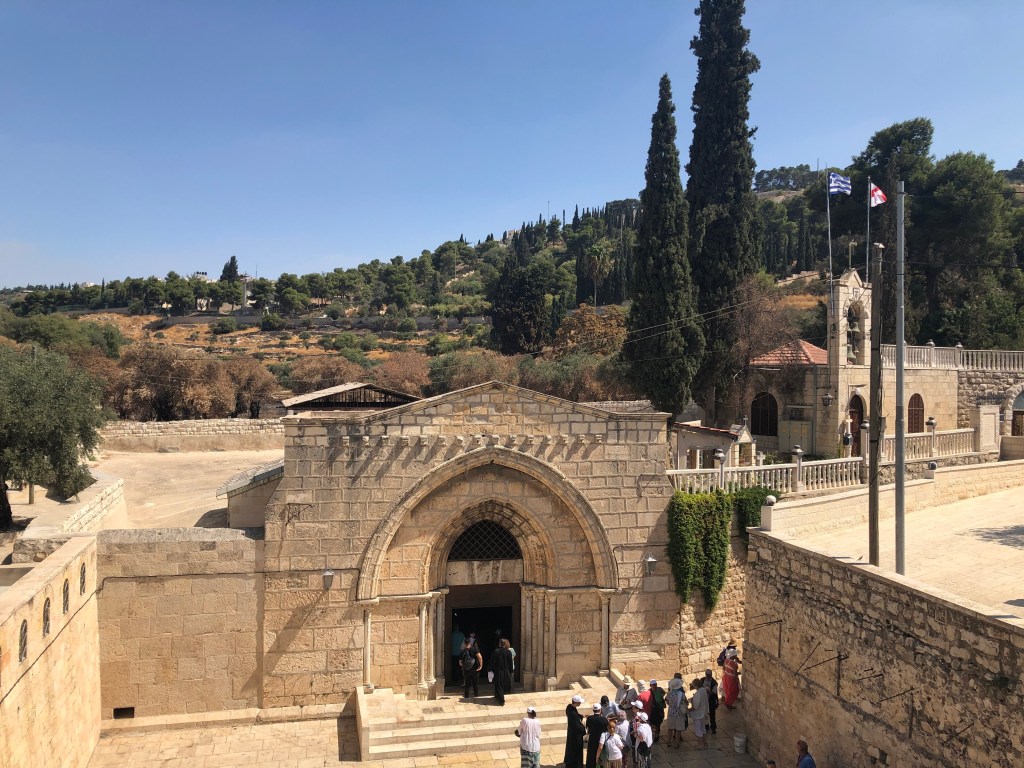
Tomb of the Virgin Mary
Our trip to Jerusalem was an action packed 2 days, complete with 35 miles on our two feet. This ancient city is one of the most special places I have encountered. The passion and zealous spirituality is incredible to witness and the history that surrounds this place is baffling. I have never experienced such diversity in such a small perimeter, a diversity that adds amazingly rich culture to every step you take. Not only did I receive an unforgettably engaging history lesson, I was also reminded of one of my favorite educators, Maria Montessori, the educational trailblazer who founded the term “hands-on learning” and professed “What the hand does, the mind remembers.”
 Travels With Charlie